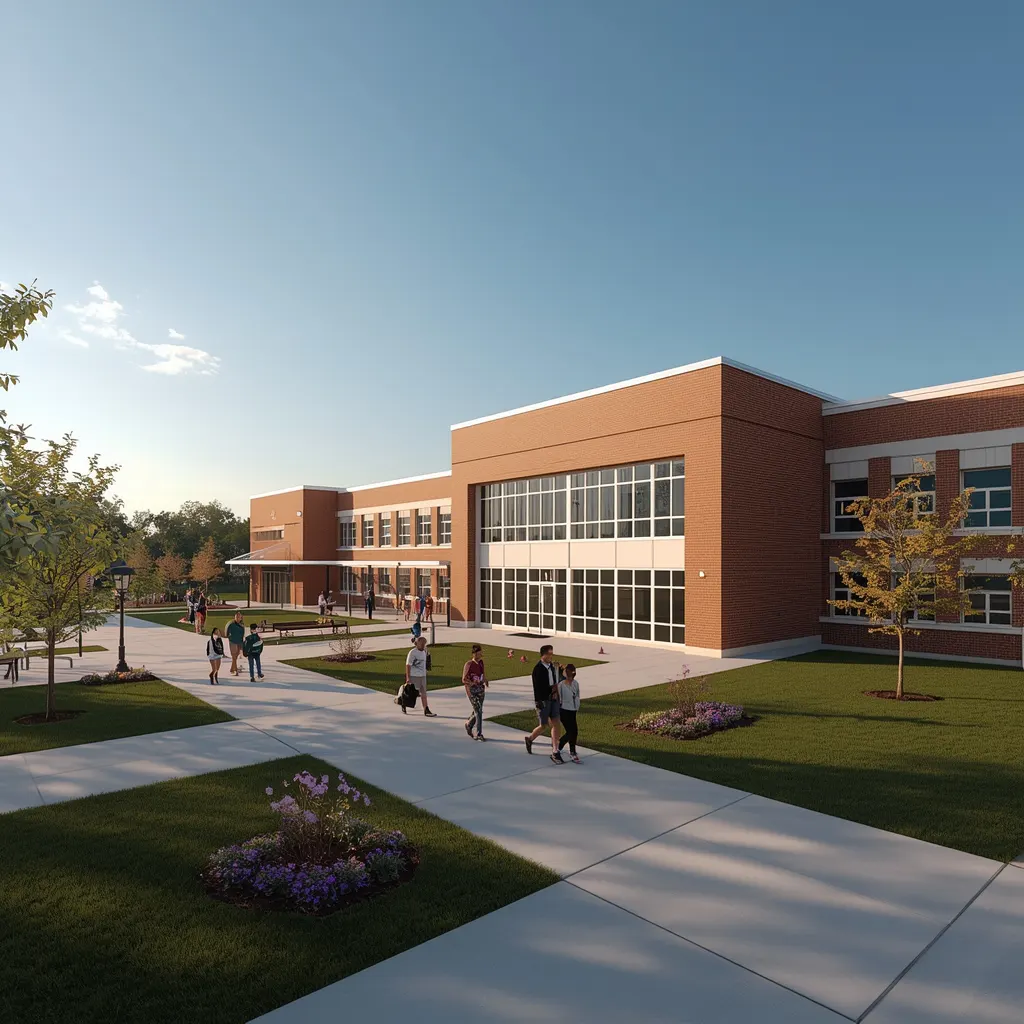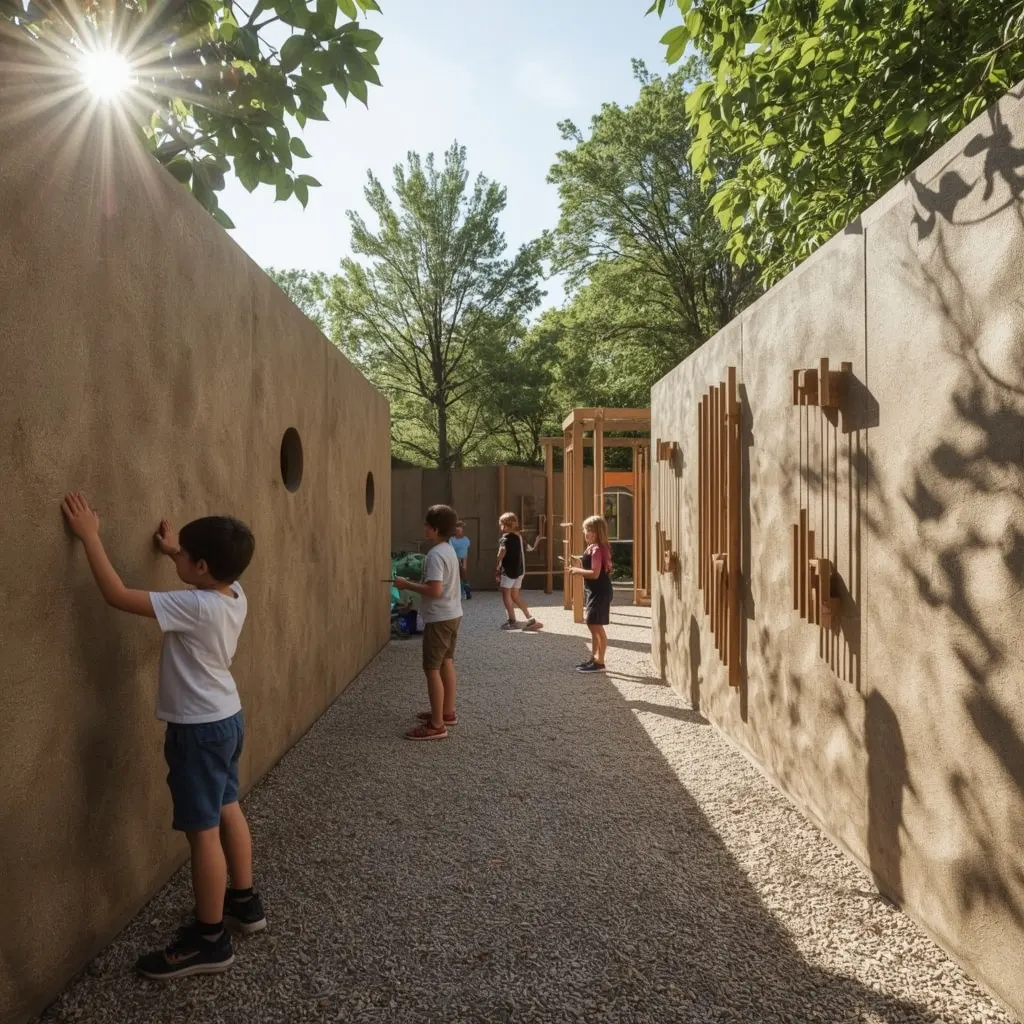

In this Living in Naperville episode, host Dan Firks tours KLA Schools, a Reggio Emilia inspired preschool in Naperville, with Executive Director Erica Koegel and principals Kelly Collins (Naperville West), Kimberly Pullen (Naperville), and Stephanie Schultz (Plainfield). They talk through the Reggio Emilia philosophy, what parents should know, and walk through the classrooms, the piazza, and the atelier.
Read the full local highlight on KLA Schools of Naperville →
Video Transcript
The interview features four KLA educators; where the audio does not clearly identify which one is speaking, lines are labeled simply as a KLA educator.
Dan Firks: Hello and welcome to this episode of Living in Naperville. Today I have the pleasure of meeting with Erica Koegel, the director of KLA Schools here in Naperville. It’s not all about ABCs and 123s, it’s about creativity and culture. Let’s go check it out. Hi, Erica, I’m Dan Firks with Living in Naperville. How are you?
Erica Koegel: I’m doing great. Welcome to our school.
Dan Firks: Thank you, I’m excited to learn more about KLA. Ladies, thanks for having us today. I really appreciate you taking time out of your day. I’d love to get to know each and every one of you. If you want to start, Erica.
Erica Koegel: Yes. My name is Erica Koegel and I am the executive director. I’ve been with KLA since 2013.
Kelly Collins: Hi, I’m Kelly Collins. I am the school principal here at KLA Schools of Naperville West.
Dan Firks: So you’ve got to behave when Kelly’s in town, because she’s a principal.
Kimberly Pullen: Hi, I’m Kimberly Pullen. I am the principal at KLA Schools of Naperville.
Stephanie Schultz: Hi, I’m Stephanie Schultz and I’m the principal at KLA Schools of Plainfield, and I’ve been with the company for almost eight years.
Dan Firks: Wonderful, nice meeting you, ladies. Let’s play a little fun game, is that cool? All right, so on your whiteboards, tell me, what is the funniest thing a student has ever said to you?
KLA Educator: My mom said my dad is in the doghouse.
Dan Firks: So hopefully it wasn’t in the wintertime. What do we have over here?
KLA Educator: Today I am four, I’m getting old.
Dan Firks: Oh, that’s wonderful. What do we have over here?
KLA Educator: My mommy said I’m going to have a baby.
Dan Firks: Oh, that’s kind of exciting news. Tell me this, ladies: if a three-year-old ran the school for the day, what’s the first rule they would make?
KLA Educator: Stay outside all day.
Dan Firks: Even in the winter, they probably would, making snowmen and snow angels.
KLA Educator: No rest time. And mine was dance party all morning. My kids love to move and love music, so they would definitely want to engage in dancing.
Dan Firks: What do you think their favorite music is? Are there any Swiftie fans here?
KLA Educator: Oh yes, definitely. And I have another one: no nap time.
Dan Firks: Well, thank you, ladies, for playing that game. I really appreciate it. So, tell me a little bit about the philosophy of Reggio Emilia.
KLA Educator: Sure. The Reggio Emilia approach actually started after World War II, and it’s named after a city in Italy. They wanted the children to have opportunities to engage and have meaningful experiences. There was a philosopher, Loris Malaguzzi, who saw the people in the community trying to rebuild these schools and he helped them with the guiding principles of, let’s co-learn with the children. They are capable of doing so much, we just need to give them the opportunity to have all of these wonderful experiences. He was helping the families and the educators take pictures and document the children’s work, and people all over the world saw the projects they had done, and people come and actually visit the city in Italy to see it. One thing is, we really value and see that children are capable and competent, and they have the opportunity to choose and decide. So as educators, we just have to provide an opportunity for them to show us their learning.
KLA Educator: We also take the time to really focus on our core values at KLA, like understanding that you can’t necessarily teach somebody to be respectful, to have empathy, to be a team player. However, we can model that consistently, and it becomes a learned behavior the children will take with them outside of KLA. I would say we also respect the child’s interests. It’s a child-led approach, so we are not rigorous with testing and other features you may see in a more structured environment outside the Reggio approach.
Dan Firks: So for the parents watching this episode of Living in Naperville, what do they need to know about KLA Schools?
KLA Educator: I think it’s important for parents to know that we really focus on the whole child. Your child is going to be kindergarten ready, the academics are going to happen, and we’re going to focus on that social-emotional growth. We’re going to meet all of those milestones, we’re just going to get there in a way that’s unique for each child. By the teachers being researchers and observing alongside the children, they understand how to challenge them and how to support them to get them where they need to be. We have open communication with our teachers and parents. We have parent-teacher conferences where we have that one-on-one time to share those milestones, and we have partnerships and family engagement events.
KLA Educator: With the health and safety and cleanliness of our building, we have a zono sanitizing machine. We have procedures for cleaning, but this is an extra precaution, so we can put books, computers, almost anything in that cabinet, because being with children, sometimes you are exposed to germs, so we try our best to help alleviate that. And with our safety and security, to come inside we have a whole visitor procedure, and in the event of an emergency we have BluePoint. No other schools in the area have anything like that, but we do not want to take any risk. We want our teachers and our children to feel safe.
Dan Firks: So, Kelly, where are we stepping into?
Kelly Collins: So this is our class of fours. All of these kiddos are finishing up their program here, and at the end of August they will transition into kindergarten.
Dan Firks: They look like they’re ready to go outside.
Kelly Collins: They are. It is a beautiful day out today, so we encourage as much outdoor time as possible. We have Miss Swathy and Miss Mia. Miss Swathy has been with us for almost two years now, and Miss Mia almost two years now.
Dan Firks: Bennett, do you want to show them what you guys built over here today? If it’s a house, could I put a for-sale sign in front of it? Where are the bedrooms?
Dan Firks: It’s a multi-story home. And you even got an elevator. Swathy, Mia, very nice to meet you. Thanks for having us today. So, what decides how you’re going to set up for the day?
KLA Educator: We have what we call our projections. There are certain skills that we focus on, but we switch it up. Since Easter is coming, we thought of using eggs. Each egg here has a letter inside, so when they break it open, a letter comes out, and that way we’re reinforcing letters and sounds. We also think of something yellow, or the Spanish word amarillo, so we incorporate Spanish into our learning, and they can draw something that’s yellow. Right now we’re focusing a lot on addition, and we use the eggs again so they are a little more engaged.
Dan Firks: Well, thank you for sharing that with us today. You guys enjoy the rest of your day. So what’s down here? Is this the hiding space? It looks like a chalkboard, too.
KLA Educator: So this is our piazza. It is the heart of our building. The children have the opportunity to come out here, usually in the morning, and we have different areas set up. Over here is our mindfulness area, and over here is where they can write. This is our documentation. You may see this paper as them scribbling, making marks, but that mark-making turns into something, they’re learning their fine motor skills, and it eventually turns into a story. So you can see that evolution of marks and how they’re telling a story. And up here are our core values. These are things that everyone in our school lives by, so we build those values together. That social-emotional development is just as important as the academics, and these are life skills we teach the children.
KLA Educator: If we go this way, this orange classroom is our class of the twos. This is our laundry room, and this is where we have our zono machine, and we do lots of laundry, cleaning all the things for the children. We have our Nido, so that would be toddlers, and this is our threes A, that’s like a preschool classroom. Over here we have our twos B classroom, and then right behind you is our baby Nido classroom. We have two baby Nido classrooms. That room can have 12 babies in it. And that way over there is our playground.
KLA Educator: This is our class of the fours, and this will be another preschool class, but we also utilize it as an atelier. So in here you’ll notice that it is dark, and that is intentional. We have a scene set up, like a forest scene with some different animals, and the children have the opportunity to interact with those things. We have some art materials, and the children can draw what they see, like the mark-making I was telling you about earlier. And over here they are experimenting with different materials: what is magnetic and what is not. We have a variety of different magnets.
Dan Firks: Oh yeah, that one is really cool.
KLA Educator: That’s a real big magnet. Over here is where the children can experience a nature scene, and then we have different animals, so the children can interact and pretend they are in that environment or act out with the animals. Sometimes we may even play some sounds that correlate, so it’s more of an immersive experience for the children. And we love the dinosaurs. And over here we have our overhead projector, so the children can put different types of materials on it, and as they put different colored materials or different things, they can see how those objects show up.
KLA Educator: I want to invite you into our baby Nido B classroom. We are just in the process, this will be open in a few short weeks, and this room can have up to eight babies in it. Originally this was a different classroom, so we are amending our license so we can meet the needs of our current families plus people in the community for infants.
Dan Firks: And what would the age range be for the babies?
KLA Educator: They can come as young as 6 weeks old until about 15 months in the classroom. They’ll eat in here, they’ll sleep in here, and each child will have their own unique schedule, so those teachers follow that unique schedule. They work with the parents, and then we share all of those different things that happen.
Dan Firks: Well, thank you, ladies, for taking the time out of your day today. It really sounds like you are setting this firm foundation for these children to live very fruitful and exciting lives. So thank you for doing what you do, truly from the bottom of my heart. You guys are amazing. Everybody wave. Be sure to like and subscribe to get updates on our next episode, and for all your real estate needs, please visit Naperville.com.
Read the full local highlight on KLA Schools of Naperville and Plainfield →
Explore Naperville
Naperville is a vibrant community offering something for everyone. From highly rated schools and welcoming neighborhoods to local dining, seasonal events, and everyday conveniences, the city blends suburban comfort with an active lifestyle. Whether you’re researching the area, planning a visit, or considering a move, explore the sections below to learn more about what makes Naperville a great place to live, work, and enjoy.
Explore Naperville