
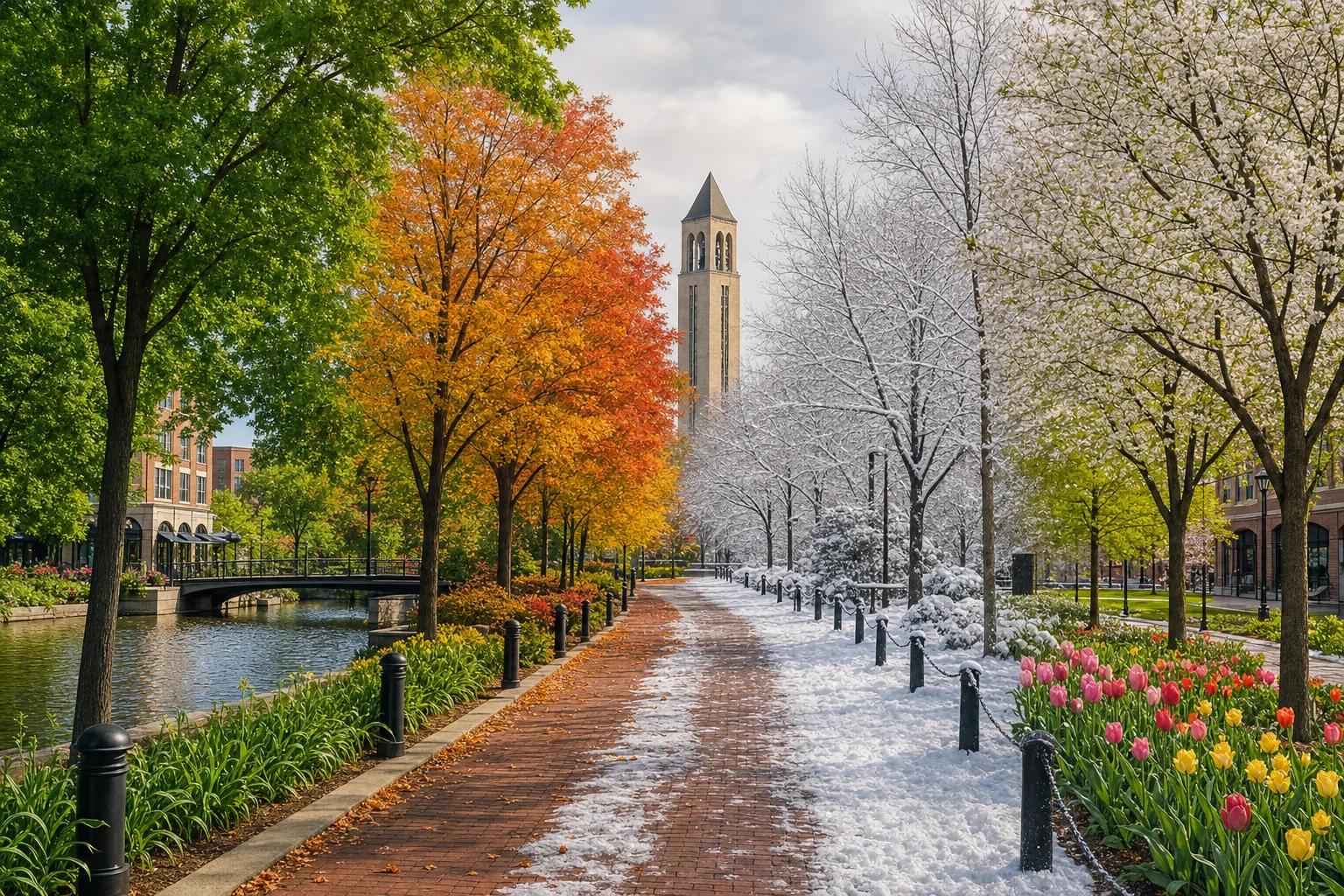
Wondering what to expect from Naperville weather? This western Chicago suburb sits in a humid continental climate zone (Koppen Dfa) and experiences four dramatic, distinct seasons. Average summer highs reach 85F in July, winters average 15F overnight lows in January, and the city sees about 30-40 inches of snow each year. Here is the complete Naperville weather guide – month-by-month, season-by-season, with what to expect and how to plan.
Naperville Climate at a Glance
| Detail | Info |
|---|---|
| Climate Zone | Humid Continental (Koppen Dfa) |
| USDA Hardiness Zone | 5b / 6a |
| Average Summer High (July) | 85F |
| Average Winter Low (January) | 15F |
| Annual Precipitation | ~38 inches |
| Annual Snowfall | 30-40 inches |
| Sunny Days/Year | ~190 |
| First Frost (avg) | Mid-October |
| Last Frost (avg) | Late April / early May |
| Coordinates | 41.78N, -88.15W (elevation ~700 ft) |
Naperville Weather in Summer (June – August)
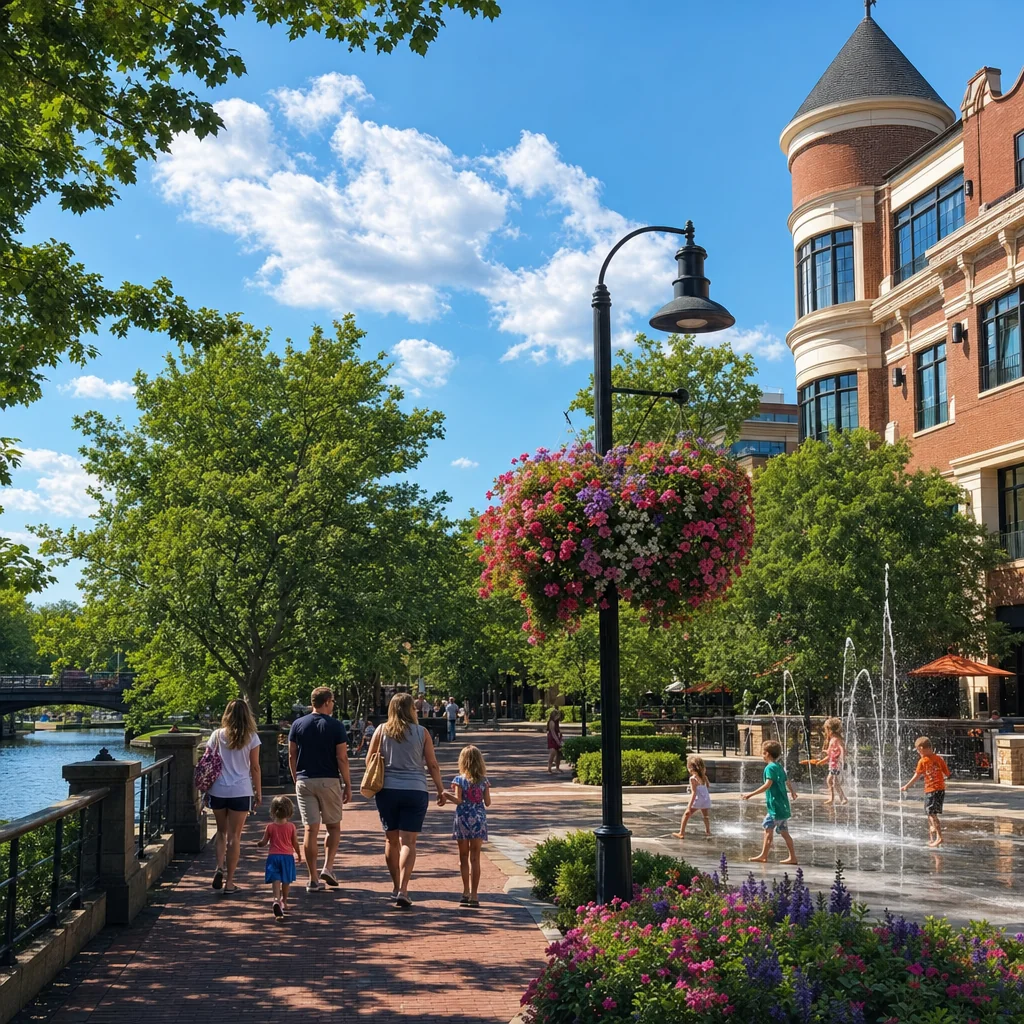
Summer is Naperville’s peak season for outdoor life. Average July highs hit 85F with overnight lows in the mid-60s. Humidity climbs steadily from late May, reaching uncomfortable levels (dew points in the 70s) by mid-July. Afternoon thunderstorms are common – typically brief but intense. June through August deliver the year’s longest days, with 15+ hours of usable daylight.
Summer averages by month:
- June: High 80F, Low 60F, ~4 inches rain, 14+ hours daylight
- July: High 85F, Low 65F, ~4 inches rain, peak humidity
- August: High 83F, Low 63F, ~4 inches rain, slightly cooler nights
What to do in summer: The Naperville Riverwalk, Centennial Beach, free Riverwalk concert series (Wednesday and Thursday evenings), the Naperville Food Truck Festival, and weekend farmers markets all run at peak energy. Plan outdoor activities for morning or evening to avoid mid-afternoon heat.
Naperville Weather in Fall (September – November)
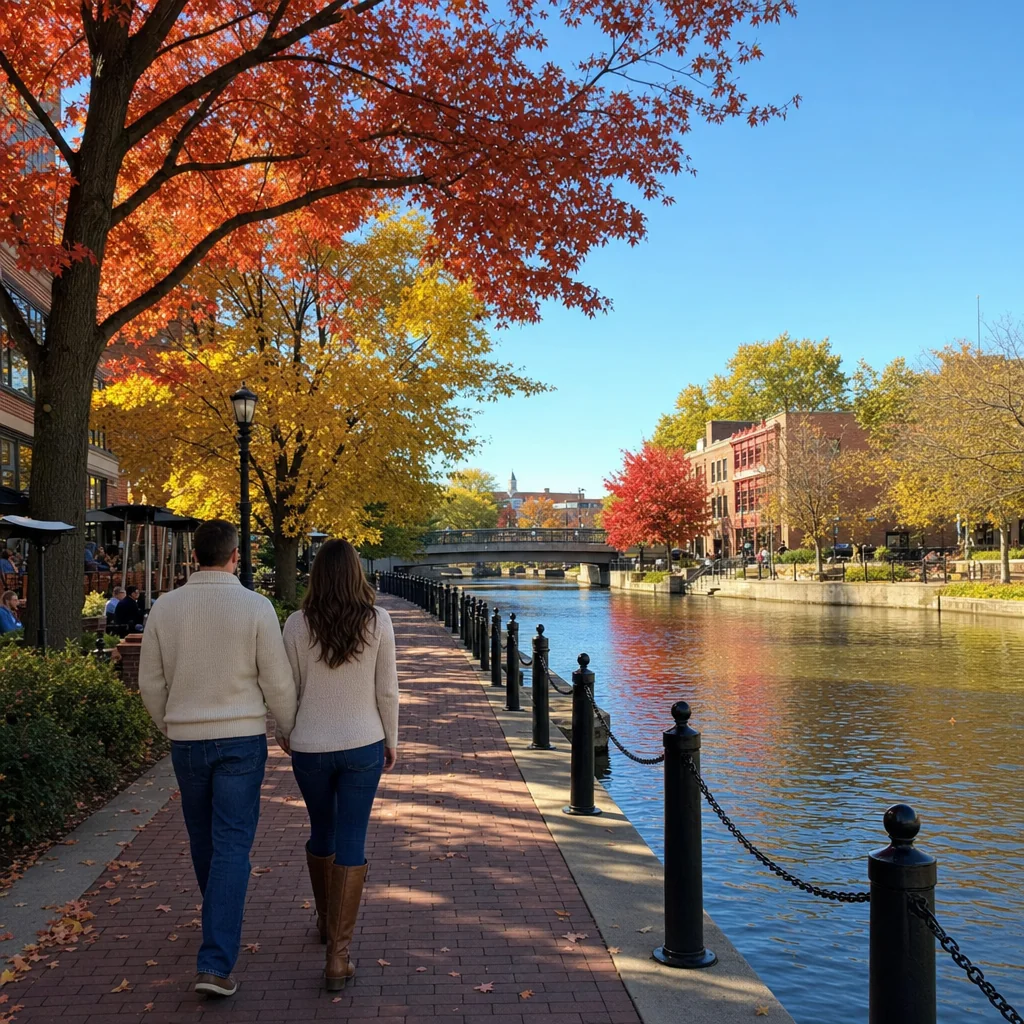
Fall in Naperville is widely regarded as the most beautiful season. September starts warm (75F average highs) with mostly clear blue skies. By mid-October, the mature oaks, maples, and ash trees that line every Naperville neighborhood explode into red, orange, and gold. November turns markedly colder, with the first frost typically arriving in mid-October and the first snowfall possible by mid-to-late November.
Fall averages by month:
- September: High 75F, Low 55F, ~3 inches rain, comfortable
- October: High 63F, Low 42F, peak foliage mid-month
- November: High 48F, Low 30F, first snow possible
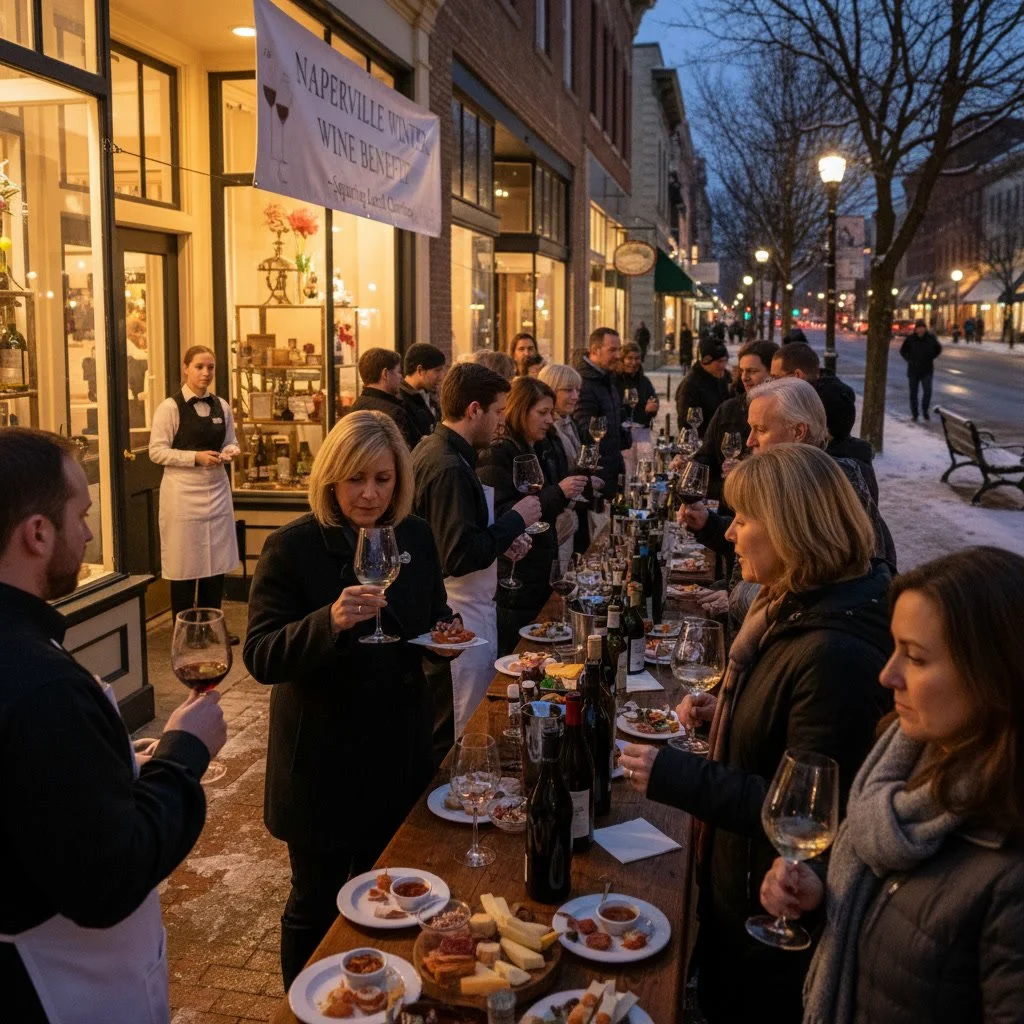
What to do in fall: Walk the Riverwalk during peak foliage, hike Springbrook Prairie Forest Preserve, attend Last Fling on Labor Day weekend, or browse the Naperville Wine Festival in September. Cool, clear days are ideal for the downtown Naperville walking loop.
Naperville Weather in Winter (December – February)
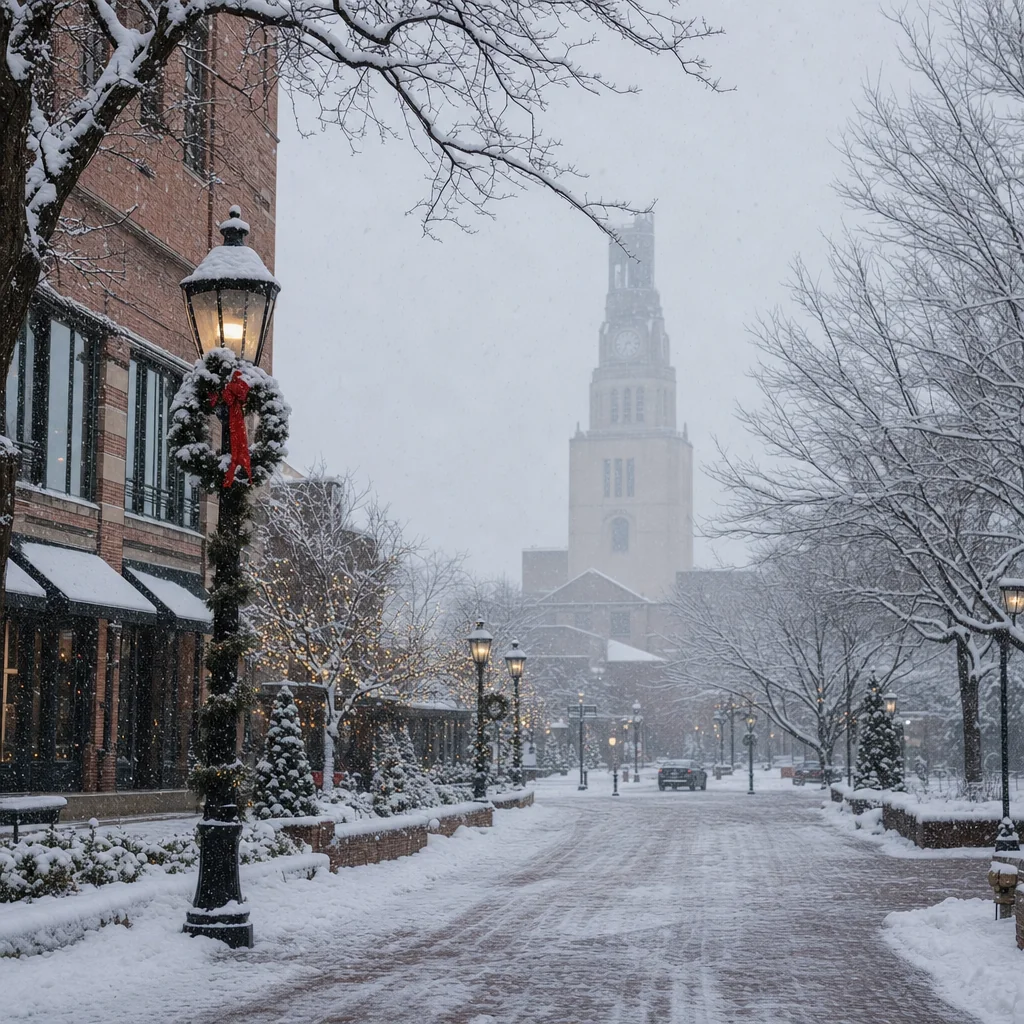
Naperville winters are cold and snowy, but rarely brutal. Average January highs hover near 30F with overnight lows around 15F. Polar vortex events occasionally push temperatures below zero for a few days each winter, but those are exceptions. Annual snowfall averages 30-40 inches, distributed across the season – rarely all at once. The Chicago region’s lake-effect snow can deliver surprise accumulation, especially in early winter.
Winter averages by month:
- December: High 35F, Low 22F, ~9 inches snow
- January: High 30F, Low 15F, ~11 inches snow (coldest month)
- February: High 35F, Low 18F, ~8 inches snow
What to do in winter: Mosaic of Lights downtown holiday display, Christkindlmarket Naperville at Naper Settlement, sledding at Knoch Park, ice skating at Centennial Park, and free indoor programming at the Naperville Public Library. Layer up – even short Riverwalk visits in January require serious cold-weather gear.
Naperville Weather in Spring (March – May)
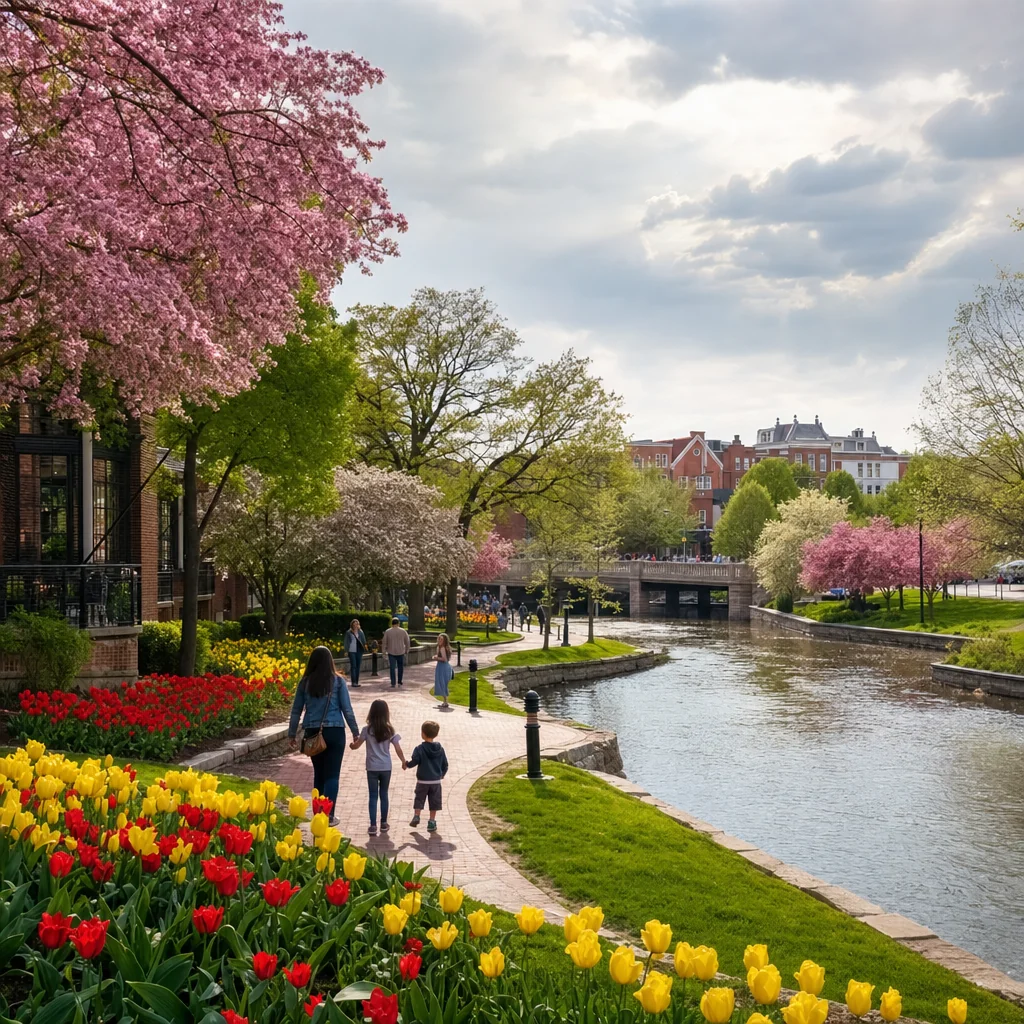
Naperville spring is dramatic and unpredictable. March is the wildest weather month – average highs in the mid-40s but late snowstorms aren’t unusual. April warms quickly, with average highs in the upper 50s and the first crabapple blossoms appearing mid-month. May is the year’s most beautiful month: 70F average highs, lilacs and tulips in full bloom along the Riverwalk, and the city’s outdoor event calendar kicking into gear.
Spring averages by month:
- March: High 47F, Low 30F, unpredictable – snow possible
- April: High 60F, Low 40F, first blooms
- May: High 71F, Low 50F, peak tulip and lilac season
What to do in spring: Watch the Riverwalk tulip displays peak in April-May, attend the Naperville Food Truck Festival (typically early-to-mid May), browse the spring farmers market opening, and hike Springbrook Prairie as wildflowers emerge.
When Is the Best Time to Visit Naperville?
The best months to visit Naperville depend on your priorities:
- Best for weather + events: Late May through mid-September – warm days, full event calendar, outdoor patios open.
- Best for foliage: Mid-October – peak fall colors.
- Best for spring blooms: Mid-April through mid-May – tulips, crabapples, lilacs.
- Best for fewer crowds: Late February through mid-March – quiet downtown, deals on weekend stays.
- Best for holiday atmosphere: Mid-November through New Year’s – Mosaic of Lights, Christkindlmarket.
Severe Weather and Storms in Naperville
Like most of the Chicago metro, Naperville experiences occasional severe weather:
- Thunderstorms: Common from May through September, especially late afternoons. Most are brief but can be intense.
- Tornadoes: Possible, mainly April through September. The greater Chicago area averages a small number of tornado warnings per year. Sirens and weather radio coverage are reliable.
- Polar vortex events: 1-2 events per winter on average. Temperatures can dip to -10F to -20F for 24-72 hours.
- Lake-effect snow: Less impactful than further north, but possible in early winter.
- Flooding: The DuPage River can flood during heavy spring rains; the city has invested in flood mitigation infrastructure.
What to Pack for Naperville by Season
Summer (June – August)
- Light, breathable clothing for daytime heat
- A light layer for evenings (slightly cooler near the Riverwalk)
- Sunscreen, sunglasses, hat
- Umbrella for afternoon thunderstorms
- Insect repellent for evening outdoor activities
Fall (September – November)
- Layers – mornings cool, afternoons warm
- Light jacket for September; warmer coat by mid-November
- Comfortable walking shoes for fall foliage walks
- Camera for peak October colors
Winter (December – February)
- Insulated winter coat
- Hat, gloves, scarf, thermal layers
- Waterproof boots for snow
- Hand warmers for outdoor events like Christkindlmarket
Spring (March – May)
- Layers – unpredictable temperatures
- Light raincoat or umbrella
- Closed-toe shoes early spring, lighter shoes by May
- Light sweater for evenings
Frequently Asked Questions
What is the average temperature in Naperville?
Naperville’s annual average temperature is about 50F. July is the warmest month (avg high 85F) and January is the coldest (avg low 15F).
How much snow does Naperville get?
Naperville averages 30-40 inches of snowfall per year, distributed across December through March. Heavy single-day storms (8+ inches) happen a few times each winter.
What climate zone is Naperville in?
Naperville sits in USDA Hardiness Zone 5b/6a (a Koppen Dfa humid continental climate) – typical of the western Chicago suburbs.
When does it start snowing in Naperville?
The first measurable snowfall typically arrives in mid-to-late November. The last spring snow usually falls in late March, but late-season snowstorms aren’t unheard of in early April.
What is the weather like in Naperville in May?
May is one of Naperville’s best months – average highs of 71F, lows of 50F, and the Riverwalk gardens in peak bloom. Some afternoon thunderstorms are typical.
Does Naperville get tornadoes?
Tornadoes are possible in the greater Chicago area, mainly April through September, though direct hits on Naperville are rare. The community has reliable storm warning infrastructure.
Looking to Buy or Sell in Naperville?

Have questions about buying or selling real estate in Naperville? Get in touch with Dan Firks today.
Contact Dan Firks
Recent Post
Oct. 09, 2026
Buying a Home in Unincorporated Naperville: Outside the City Limits
Oct. 08, 2026
First Time Home Buyer Programs in Naperville: IHDA, Limits and Steps
Oct. 07, 2026
Ranch Homes in Naperville: How to Search, Verify and Inspect
Oct. 07, 2026
Naperville Halloween and Fall Events 2026: Things to Do Oct 10 to Nov 5
Oct. 06, 2026
Building a Custom Home in Naperville: Lots, Teardowns, Costs, Builders
Explore Naperville
Naperville is a vibrant community offering something for everyone. From highly rated schools and welcoming neighborhoods to local dining, seasonal events, and everyday conveniences, the city blends suburban comfort with an active lifestyle. Whether you’re researching the area, planning a visit, or considering a move, explore the sections below to learn more about what makes Naperville a great place to live, work, and enjoy.
Explore Naperville