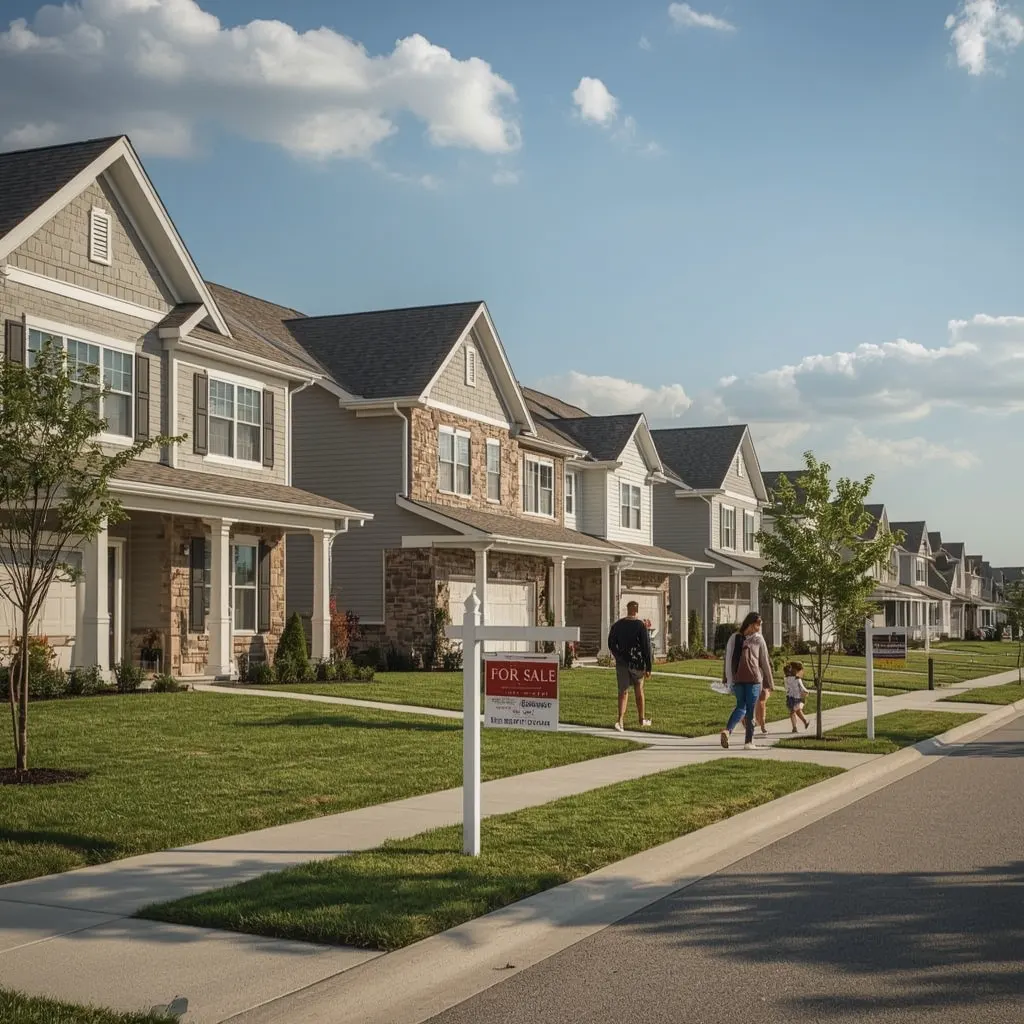

A Zestimate is a useful starting point, not a price. Zillow publishes its own accuracy figures, and they are not one figure: as of the accuracy data refresh dated August 8, 2026, Zillow reports a nationwide median error rate of 1.78 percent for homes that are on the market and 7.20 percent for off-market homes. Until the day you list, your house is an off-market home. That gap is the whole story, and it is why the number on your screen and the number your agent gives you can sit tens of thousands of dollars apart without either one being dishonest.
I am Dan Firks, Founder and CEO of the Dan Firks Team at Coldwell Banker Real Estate Group here in Naperville. Sellers raise this with me more than almost anything else, usually some version of Zillow says one number and you are saying another. Below is what each number actually measures, which one to use for what, and where the algorithm is structurally blind. If you want to talk through your own address first, call or text me at 630.637.9009 or email Dan@Naperville.com.
What this guide covers
- How accurate is a Zillow Zestimate?
- Why does the Zestimate differ from your agent’s number?
- Zestimate vs CMA vs appraisal: what is the difference?
- Should you get a pre-listing appraisal before you sell?
- Why did your Zestimate change after you listed?
- What should a Naperville seller actually do?
- Frequently asked questions
How accurate is a Zillow Zestimate?
Accurate enough to be a starting point, and not accurate enough to price a house. Zillow publishes the numbers itself: a nationwide median error rate of 1.78 percent for on-market homes and 7.20 percent for off-market homes, per Zillow’s own Zestimate page, accuracy data refreshed August 8, 2026 and checked August 11, 2026.
Median error is the part most people misread. A 7.20 percent median error does not mean every Zestimate is off by 7.20 percent. It means half of them are off by less than that and half are off by more, high or low. A meaningful share are much further off than that.
| What Zillow publishes | Figure |
|---|---|
| Nationwide median error, homes on the market | 1.78 percent |
| Nationwide median error, off-market homes | 7.20 percent |
| Chicago metro median error, homes on the market | 1.89 percent |
| Chicago metro on-market Zestimates within 5 percent of the sale price | 83.66 percent |
| Chicago metro on-market Zestimates within 10 percent of the sale price | 96.10 percent |
| Chicago metro homes with a Zestimate in the on-market sample | about 43,800 |
Two things about that flattering on-market number are worth knowing before you take comfort in it. First, Zillow calculates it by comparing the last Zestimate shown before a home went pending against the final recorded sale price. Second, Zillow states that for on-market homes the model takes in listing information, including the list price. So the 1.78 percent figure is measured on homes the model had already watched get listed, at a moment when it could see what the seller was asking. An off-market home gets none of that.
It helps to scale the off-market figure against a real local number. Redfin reported a median sale price of $594,644 for Naperville for the three months ending May 2026. Apply Zillow’s published off-market median error to a price that size and you are looking at roughly $42,800 in either direction. That is an illustration of scale, not a prediction about your house, but it is why a 7 percent band is not a rounding error in this market.
Why does the Zestimate differ from your agent’s number?
Because the two are measuring different things from different data. A Zestimate is a model output built from public records, tax assessor data, MLS feeds and broad market trends. A comparative market analysis, or CMA, is a local agent’s analysis of specific recent sales near your address, adjusted for how your house actually compares to each of them.
Zillow is direct about the geographic difference. On its own site it says its estimating method differs from a comparative market analysis completed by a real estate agent, and that it uses data from a geographic area much larger than your neighborhood, up to the size of a county, to calculate the Zestimate. Naperville sits across two counties and runs from downtown condominiums to large single-family homes on acreage. A county-scale read of a market that wide is going to be blunt at the address level.
Here is what no automated model has ever seen about your house:
- Condition. Two homes with identical square footage and identical bed and bath counts can be twenty years apart in real condition.
- The quality of the updates, not just the fact of them. A kitchen redone in 2016 and a kitchen redone last year both read as a kitchen in a public record.
- Layout and flow. Where the stairs land, whether the primary bedroom is on the main level, whether the fourth bedroom is genuinely usable.
- What the lot does. Backing to open space, backing to a retention pond, or fronting a six-lane road are three very different numbers. The model sees one lot size.
- Work that never got permitted, which means it never reached the assessor’s file at all.
- Finish level. Trim, millwork, flooring and fixtures move a price in this market and appear nowhere in a public record.
In my experience, condition is the single biggest source of the gap, and it cuts both ways. I have walked into homes where the automated number was badly low because the owners quietly reinvested in the house for a decade, and homes where it was high because the file on record is twenty years stale and the systems are original. A model cannot tell those two houses apart. A person standing in the kitchen can in about four minutes.
Zestimate vs CMA vs appraisal: what is the difference?
They are three different products, made by three different parties, for three different purposes. A Zestimate is an automated estimate published for consumers. A CMA is a licensed agent’s opinion of market value, used for pricing and listing decisions. An appraisal is an independent licensed appraiser’s opinion of market value, produced for a lender.
| Zestimate | CMA | Appraisal | |
|---|---|---|---|
| Who produces it | An automated valuation model run by Zillow | A licensed real estate agent or broker | A licensed or certified appraiser |
| Does anyone see the house | No | Yes, the agent walks it | Yes, the appraiser inspects it |
| What it is built from | Public records, tax assessor data, MLS feeds, market trends, and listing data once a home is on the market | Recent comparable sales near the address, adjusted for condition, updates, layout and lot | Selected comparable sales plus an inspection, documented to a lender standard |
| What it is for | A free starting point for consumers | Setting a list price and a pricing strategy | Supporting a mortgage loan decision |
| When it happens | Continuously, refreshed multiple times per week | Before you list, and revisited if the market moves | After a contract, ordered by the lender financing the buyer |
| What it costs you | Nothing | Nothing from most agents | A fee, paid by whoever orders it |
| Is it an appraisal | No, and Zillow says so plainly | No | Yes |
Market value, in all three cases, means the price a willing buyer and a willing seller would agree on in an open market. An appraisal is one licensed professional’s opinion of that value, formed after inspecting the property and selecting comparable sales. It is not a separate, truer category of value. It is a documented opinion a lender is willing to lend against, which is exactly why it carries weight in any transaction involving a mortgage. It is also not the last word: appraisals get contested, and buyers and sellers renegotiate around them all the time.
One boundary is worth stating plainly, because sellers blur it constantly. A CMA estimates market value only. It is not your net proceeds, and it is not a tax calculation. What actually reaches your account after selling costs is a separate exercise, and you can run it on the Naperville net proceeds calculator. Anything involving taxable gain belongs with a tax professional, not with an agent and certainly not with an algorithm.
Should you get a pre-listing appraisal before you sell?
Usually not. For most Naperville homes a well-built CMA covers it, and if your buyer is financing, their lender orders its own appraisal anyway, which is the one the deal turns on. A pre-listing appraisal is an out-of-pocket cost you pay directly, and a buyer’s lender does not use a seller-ordered appraisal in place of its own.
There are situations where it earns the cost:
- The home is genuinely hard to compare. Unusual acreage, a custom build with no real peer nearby, or a heavily modified floor plan.
- More than one party has to agree on a number. Estate and probate sales, a partition, or any situation where a neutral third-party opinion prevents an argument.
- The agents you interviewed came back far apart from each other and you want an independent read before you commit to a strategy.
- You expect the buyer’s appraisal to be contested and you want documentation ready to support your price.
Appraisal fees are set by the individual appraiser and vary with the size and complexity of the property, so get a quote rather than trusting a rule of thumb you read somewhere. If you are choosing between paying for an appraisal and sitting down with several agents, do the agent conversations first. Listing appointments are typically free, and an hour of conversation usually tells you whether the disagreement is real or whether one opinion is simply an outlier. Our guide on how to choose a listing agent in Naperville covers what to ask.
In my experience, sellers who order a pre-listing appraisal because they distrust an agent’s number usually find the appraisal lands close to the CMA. A pre-listing appraisal is genuinely useful when the property is unusual. It is rarely useful as a referee between two opinions.
Why did your Zestimate change after you listed?
Because listing the home fed the model data it did not have before, including your list price. Zillow states this in its own FAQ: when a home goes on the market, new data can be incorporated into the model, and for on-market homes the Zestimate includes listing information such as the list price and recent market activity, information that is simply not available while a home is off-market.
The practical consequence matters more than the mechanism. Once you list, the Zestimate stops being an independent second opinion on your pricing, because it has partly absorbed your pricing. If you want to use it as an outside check on an agent’s number, look at it before you list, write the number down, and stop reading it as a fresh opinion afterward.
Zillow documents a second behavior worth knowing about. A listing that stays on the market longer than is typical for its local market can transition back to an off-market valuation, in some cases after roughly a year or more depending on the market. That means a stale listing can watch its Zestimate move for reasons that have nothing to do with the house.
In my experience, this is where sellers get genuinely frustrated, and it is almost always a misunderstanding rather than a defect. They check the Zestimate the week after going live, see it move toward the list price, and read it as validation. It is closer to an echo.
What should a Naperville seller actually do?
Get a real number for your actual address, understand how that number was built, then check it against the market you are actually selling into. In that order.

- Get a CMA on your address. Start with the Naperville home value tool for a first number, then have an agent walk the house. The walk-through is what closes the distance between a model and a price.
- Understand the method. Read how a home valuation works in Naperville so you can tell a CMA built from real evidence apart from a number someone picked to win your listing.
- Sanity-check the market. Look at current Naperville real estate market conditions. Any valuation is a snapshot of a market, and the market moves under it.
- Separate value from proceeds. Run the net proceeds calculator. Market value is the top line, not the number that reaches your account.
- Talk to more than one agent. Ask each one which specific recent sales they used and what they adjusted for. If two agents are far apart, the reason is usually visible in the comparable sales they chose.
If you would rather see the whole picture in one place, the selling a home in Naperville hub collects the tools and the guides in one spot.
And if you would rather skip all of it and just have someone look at your house and tell you what it is worth and why, that is a phone call. Call or text me at 630.637.9009 or email Dan@Naperville.com, and we can walk through the comparable sales on your street together. There is no obligation, and you are welcome to take the number to whatever agent you end up hiring.
Frequently asked questions
Is a Zestimate high or low?
It misses in both directions. Zillow publishes a median error rate, which means half of homes are off by less than that figure and half are off by more, high or low. As of the accuracy data refresh dated August 8, 2026, Zillow reports a nationwide median error of 1.78 percent for homes on the market and 7.20 percent for off market homes. Until the day you list, your house is an off market home.
What is more accurate than a Zestimate?
A comparative market analysis from a local agent and a licensed appraisal are both built from your specific property rather than from a model. Zillow says much the same thing on its own site, recommending that people supplement the Zestimate with other research such as visiting the home, getting a professional appraisal, or requesting a comparative market analysis from a real estate agent.
Is a Zestimate an appraisal?
No. Zillow states that the Zestimate is not an appraisal and cannot be used in place of one. An appraisal is the opinion of a licensed appraiser about market value, formed after inspecting the property and selecting comparable sales, and it is the valuation a mortgage lender relies on.
Do banks use Zestimates?
No. A mortgage lender orders an appraisal from a licensed appraiser, and that appraisal is what the loan decision rests on. An automated estimate from a consumer website, including a Zestimate, does not substitute for it.
How often do Zestimates update?
Zillow states that it refreshes Zestimates for all homes multiple times per week, and that updates can occasionally be delayed by model or system changes. Updating your home facts on Zillow can also change the estimate, although cosmetic updates may not move it at all.
Should I price my home at the Zestimate?
No, not on its own. Price from recent comparable sales near your address, adjusted for the condition, layout and finish level of your specific home, and treat the Zestimate as one reference point among several. Pricing from a single automated number is how homes end up sitting on the market or leaving money behind.
Sources
- Zillow, What is a Zestimate. Nationwide and metro median error rates, accuracy methodology, and FAQ. Accuracy data refreshed August 8, 2026; page checked August 11, 2026. zillow.com/z/zestimate
- Redfin, Naperville Housing Market. Median sale price $594,644, three months ending May 2026. redfin.com
Written by Dan Firks
I am Dan Firks, Listing Specialist, Luxury Home Specialist, Realtor, Broker, and Founder and CEO of the Dan Firks Team at Coldwell Banker Real Estate Group in Naperville. Over the course of my career I have sold more than 1,500 homes and led one of the top-producing real estate teams in Illinois, grounded in my core values of infinite worth, integrity, and excellence. My work and market insights have been featured in Chicago Magazine, Zillow, Realtor.com, Top Agent Magazine, Naperville Magazine, and Glancer Magazine. To talk about your move in the Naperville area, call or text me at 630.637.9009 or email Dan@Naperville.com.
Looking to Buy or Sell in Naperville?

Have questions about buying or selling real estate in Naperville? Get in touch with Dan Firks today.
Contact Dan Firks
Recent Post

Oct. 09, 2026
Buying a Home in Unincorporated Naperville: Outside the City Limits

Oct. 08, 2026
First Time Home Buyer Programs in Naperville: IHDA, Limits and Steps
Oct. 07, 2026
Ranch Homes in Naperville: How to Search, Verify and Inspect

Oct. 07, 2026
Naperville Halloween and Fall Events 2026: Things to Do Oct 10 to Nov 5
Oct. 06, 2026
Building a Custom Home in Naperville: Lots, Teardowns, Costs, Builders
Explore Naperville
Naperville is a vibrant community offering something for everyone. From highly rated schools and welcoming neighborhoods to local dining, seasonal events, and everyday conveniences, the city blends suburban comfort with an active lifestyle. Whether you’re researching the area, planning a visit, or considering a move, explore the sections below to learn more about what makes Naperville a great place to live, work, and enjoy.
Explore Naperville