

Downsizing in Naperville: See What the Big House Nets and Where to Go Next

This guide is for the homeowner selling a larger, long-owned family home to move to something smaller, an empty-nester or retiree who usually stays in or near Naperville. It is not a move out of the area and not a move into Naperville; the frame is life stage and home size. Your destination might be a smaller single-family house, a townhome or condo, or a 55+ active-adult community. The question underneath it all is net proceeds, what the big house nets after taxes and costs, and this guide covers the two payloads: the tax picture and your local right-size options. Start at the seller hub, Selling a Home in Naperville, or see what your Naperville home could sell for. A live calculator and a human valuation give you a current number, not a rule of thumb, and no promised figure.
Why empty-nesters and retirees are downsizing in Naperville now
The Dan Firks Team has worked with older sellers making exactly this move. As one client wrote, "he has been extremely diligent and patient in helping our seniors who have sold homes this year." (Nathan L). Most empty-nesters and retirees reach this decision for practical reasons: the family home is larger than daily life now needs, and it carries high and rising costs. Illinois has among the highest effective property-tax rates in the country, roughly 1.88 to 2.07 percent by common measures, so a big, long-owned DuPage County home can cost a great deal every year to simply keep. The honest answer to whether you should move, and what the sale would leave you, does not come from a rule of thumb or a neighbor's story. It comes from a current, personalized number for your specific home. Downsizing can feel heavy, and nothing here promises a particular outcome; the goal is clarity, not pressure.
Taxes when you sell a long-owned Naperville home
First, the money question. Naperville.com does not give tax or legal advice, and everything below is general information, not a calculation for your situation, so confirm anything that touches your money with a tax professional.
Capital gains, the Section 121 exclusion, and the senior-bonus myth
For most sellers, the federal home-sale exclusion does the heavy lifting. IRC Section 121 lets you exclude up to $250,000 of gain, or $500,000 for a married couple filing jointly, on a main home you owned and lived in for at least 24 of the 60 months before the sale. On a home held for decades, appreciation can push the gain above that ceiling, and the excess is taxable capital gain federally. Because Illinois starts from your federal income, that same excess is also taxed by Illinois at its flat 4.95 percent rate. There is no special senior or over-55 break; the one-time age-55 exclusion was repealed in 1997, so a downsizing senior gets the same exclusion as anyone. Consult a tax professional.
How your cost basis and selling costs cut the taxable gain
If your gain is near or above that ceiling, basis matters. Adjusted basis is what you paid plus the capital improvements you made over the years, the work that adds value, prolongs the home's life, or adapts it, and certain selling costs reduce the amount you realize. A long-time owner who kept those records can meaningfully cut the taxable gain. Whether an expense counts as a capital improvement rather than a repair is fact-specific, so consult a tax professional.
Senior property-tax relief on your current home, and what just changed
Two programs can lower the tax on the home you own now. The Senior Citizens Homestead Exemption reduces your Equalized Assessed Value (EAV), the taxable value your bill is figured from, for owner-occupants 65 and older; in DuPage County that is an $8,000 EAV reduction, which lowers assessed value and is not an $8,000 cut to the bill. The Senior Freeze is separate: for income-qualified owners 65 and older, it holds the EAV at a base-year value, freezing the assessed value, not the bill or the rate. Its income cap is now $75,000 for assessment year 2026 under Public Act 104-0452, stepping to $77,000 in 2027 and $79,000 in 2028 and beyond, not the older $65,000. Both benefits attach to your current property and do not follow you, so a downsizer must verify eligibility and reapply on the new home. Confirm your county's current figures, DuPage or Will, with the Supervisor of Assessments.
Your local options: right-sizing in or near Naperville
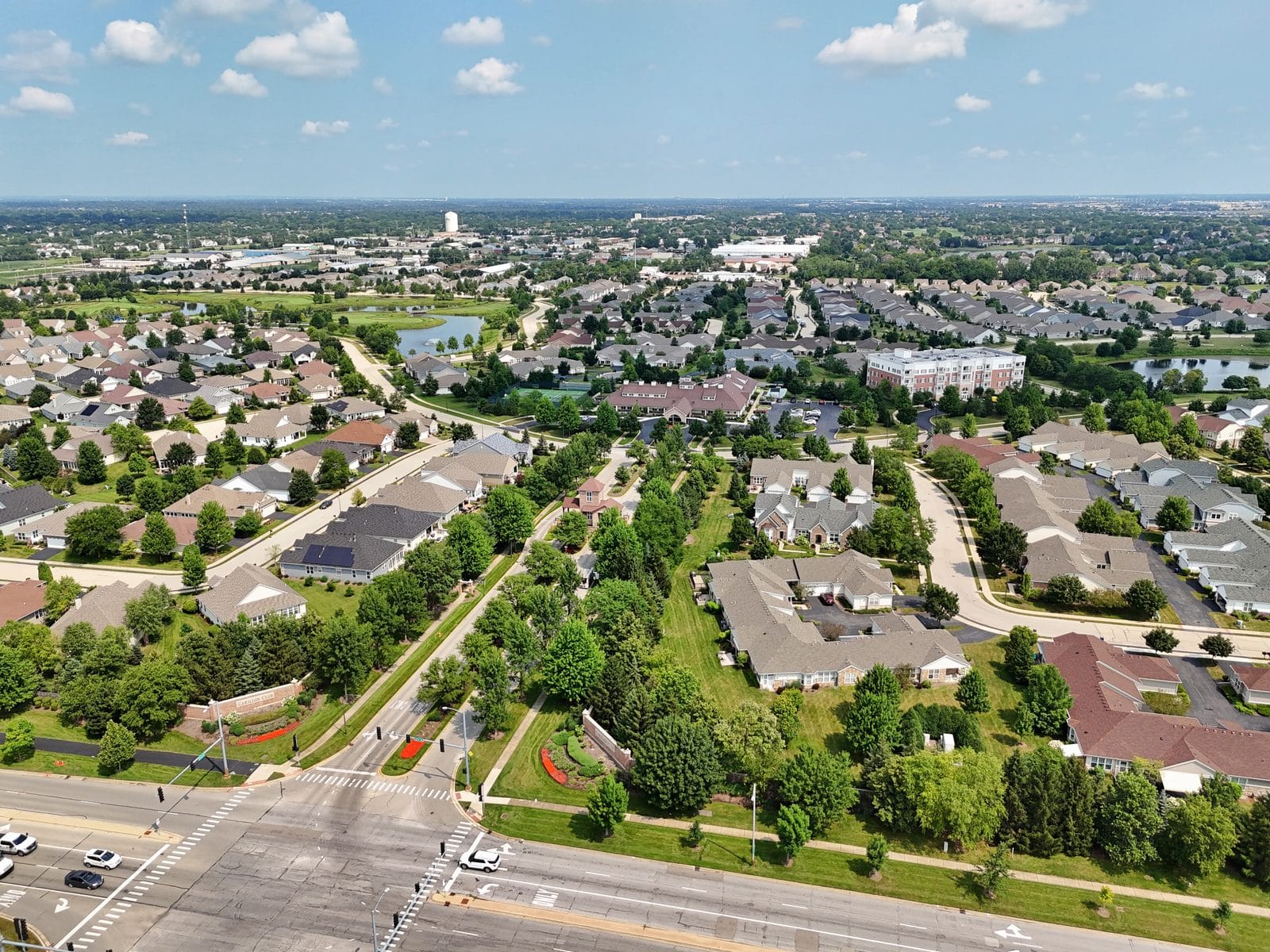
Right-sizing means choosing a smaller-footprint home while, for many downsizers, staying in or near Naperville. In practice that is one of three shapes: a smaller single-family house, a townhome or condo, or a 55+ active-adult community. Which one fits depends less on the sale price of the big house and more on what the next place costs to run each month, which is what the calculator and the property-tax picture above are for, not any single fixed figure. If you are weighing which part of the area to land in, the three shapes are easy to see on the ground: Carillon Club is the age-restricted 55+ option, with single-family homes and townhomes; Terraces of Brookdale is an established townhome-and-condo community that already draws downsizers; and Benton Terrace Condos is the downtown-condo version of the same move. You can also explore Naperville neighborhoods to compare where you might right-size and stay close to what you know.
55+ and active-adult communities near Naperville: for-sale, rental, and continuing-care
The 55+ landscape near Naperville mixes three different things, and keeping them straight is the whole point.
The options you can actually buy are for-sale communities. Carillon Club, Naperville is a for-sale 55+ community built and developed by D.R. Horton, and Ashwood Crossing, Naperville is a for-sale 55+ community built and developed by Pulte. Worth a note on names: this is Carillon Club in Naperville, not the separate Carillon community in Plainfield or Carillon Lakes in Crest Hill, which are different places.
Several nearby 55+ options are rentals, not purchases. McDowell Point is a 55+ rental community, and StoryPoint and Everleigh are rental senior-living campuses. They belong on a different line than the homes you buy.
Continuing care is a third category. Monarch Landing is an entrance-fee continuing-care community, which is not a lateral for-sale move; it is a common net-proceeds use case, since residents often sell a home first to fund the entrance fee.
These communities are lawful under the federal Housing for Older Persons Act, which broadly requires that at least 80 percent of occupied units house someone 55 or older. At resale, community rules may narrow the eligible resident or buyer pool, so verify the governing documents, and confirm current listings, prices, and terms with each community before you rely on them.
Preparing a decades-owned family home to sell
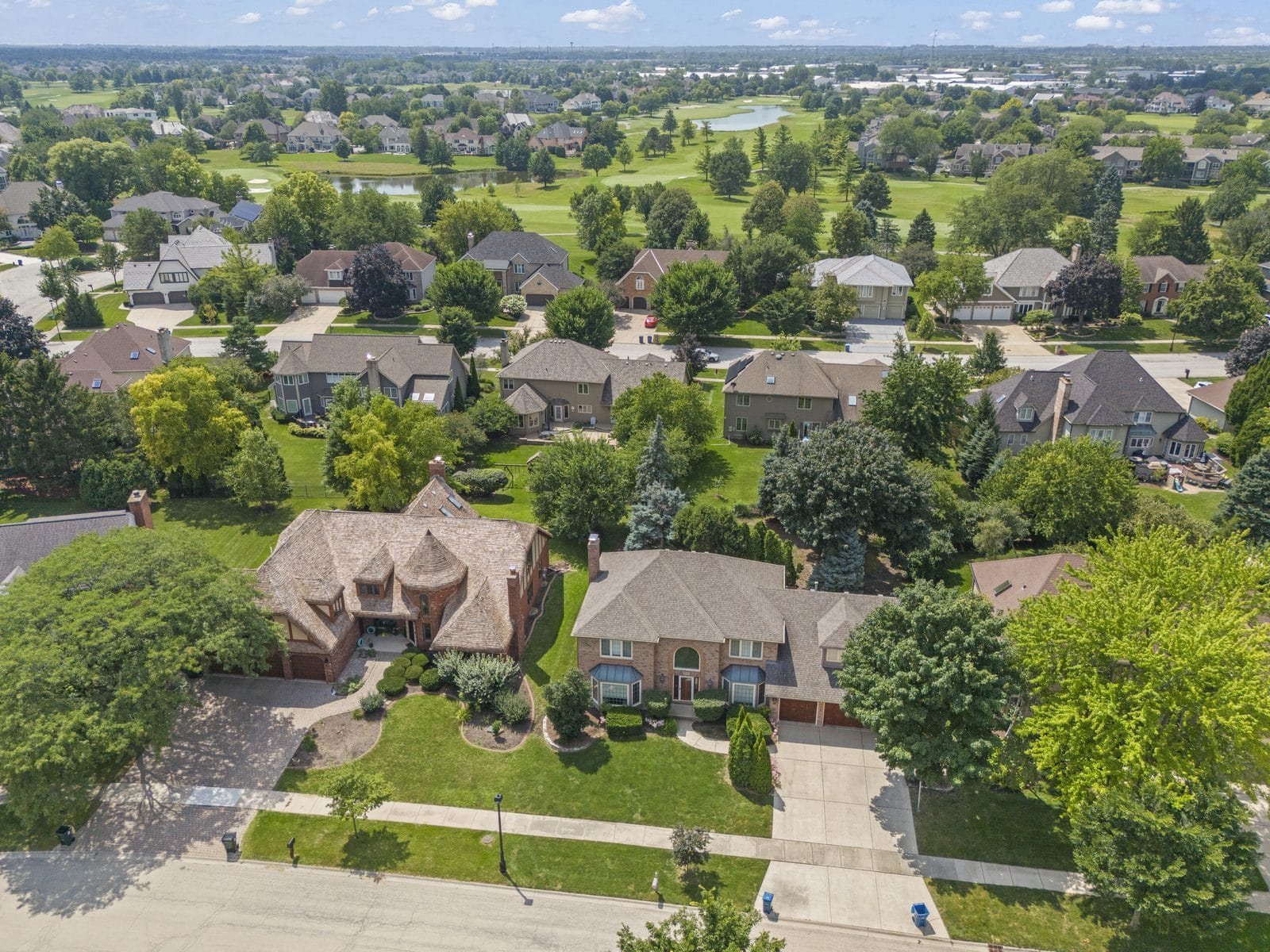
Getting a decades-owned home ready is where full service earns its keep, because the right prep protects your net proceeds and the wrong prep quietly spends it. Targeted repairs and a data-based asking price help; over-improving for a quick sale, or pricing on what the house meant to your family rather than what the market will pay, does not. As one client put it, "He was very clear on what needed to be done to get my home ready for showings. He assisted in finding and hiring landscapers, cleaners, etc." (Tamara G). Pricing is the other half. Another wrote, "He knew exactly how to position my home, what price range to aim for, and what small improvements would maximize value." (Kasi K). Two practical notes for a long-owned home: keep the capital-improvement records you gather, since they help both the sale and the basis math from the tax section, and consider a senior move manager, an established kind of professional who helps sort belongings, downsize, and coordinate the move when a lifetime of things has to fit somewhere smaller.
Timing your move: sell first, or buy the smaller home first?
Sequencing is the part downsizers lose sleep over: do you sell the big house first, or buy the smaller place first? The best order depends on your finances, the market, and how much certainty you want. Four approaches are common. First, you can sell the big home first and negotiate a rent-back or post-closing possession, commonly 30 to 60 days, so you move only once; this is often described as the lowest-risk path because it locks in known proceeds. Second, you can make the smaller-home purchase contingent on your sale, though a sale contingency can weaken your offer in a competitive market. Third, you can use bridge financing or a home-equity line to buy first, which means carrying two payments plus fees for a stretch. Fourth, you can buy into a 55+ community on its own timeline. A lender, agent, or attorney can structure the specific approach for your situation, so if it helps to map yours, talk through your move with The Dan Firks Team. None of these guarantees a particular result, and none routes you into a fast, below-market offer.
What it costs to sell, and what your Naperville home will net
Net proceeds are what the sale actually leaves you, and they start well below the list price. From the sale price, subtract the mortgage payoff, the agent commission (a negotiable percentage, not a flat figure), closing costs, any prep, and Illinois transfer taxes. What remains is your net.
The fastest way to see it for your own home is the calculator. You can estimate your net proceeds, a live tool that estimates the net proceeds on your sale, including the property-tax credit you give the buyer at closing, so you work from a current figure rather than a guess. One caution: that credit is a closing line, not your annual property-tax bill. Neither the calculator nor a CMA computes your federal or Illinois capital-gains liability, which a tax professional determines. For the full line-item breakdown, see what it costs to sell a home in Naperville. Costs and net vary by home and market, so there is no promised figure.
Illinois transfer taxes: state, county, and the Naperville city stamp
Illinois charges a state real estate transfer tax of $0.50 per $500 of value, and the county, DuPage or Will, adds $0.25 per $500. Those two generally reduce the seller's proceeds, unless your contract allocates them otherwise, so for the departing seller they come off the top. The City of Naperville adds a municipal transfer tax of $1.50 per $500 inside city limits, and by ordinance that stamp is buyer-paid; it lands on the downsizer's next purchase if the smaller home is within city limits, not on the sale of the big house. There is no senior or downsizer exemption on any of these. Confirm the exact stamp cost at closing with a closing attorney or title company.
See what your home would net
One number decides the move: what the big house nets. An instant online estimate cannot see your mortgage balance, transfer taxes, or block; a comparative market analysis (CMA) from The Dan Firks Team prices your home against recent Naperville sales to estimate its likely sale value. Keep the tools in their lanes: a CMA estimates market value, a seller net sheet estimates your proceeds, and a tax professional determines any gain. Net proceeds vary, so there is no promised figure.
Why downsizing sellers choose The Dan Firks Team
What a downsizing seller needs is not one tool but the combination. Start with the number: estimate your net proceeds on the live calculator, then pair it with a human CMA from the same team. Around that sit current, accurate local 55+ knowledge and full-service prep of a decades-owned home. Getting the 55+ facts right is part of the service: Ashwood Crossing is built by Pulte and Carillon Club by D.R. Horton, and knowing which options are for-sale, which are rentals, and which are continuing care keeps you from planning around a home you cannot actually buy. The Dan Firks Team brings those pieces together for downsizing sellers in and around Naperville. The other path on some of these searches is an as-is investor or iBuyer offer, typically below market; it is worth knowing about only as a contrast to a full-service sale, not a substitute for one. The team has worked in Naperville since 2006 and holds a 5.0 star rating across 115 client reviews.
Related seller situations. If the move south is what is really driving the downsize, the timing and tax picture change, so read selling to retire in Florida or Arizona. If you are downsizing because you inherited a parent's home and are selling that one too, selling an inherited or probate home in Naperville covers the probate and Letters of Office side. And if a job transfer set the deadline rather than retirement, relocating from Naperville works the sale backward from your report date.
Downsizing in Naperville: FAQ
Do seniors pay capital gains when selling a home in Illinois?
What senior property-tax relief is available, and did the income limit change?
Which 55+ communities near Naperville can I buy versus rent?
Is it cheaper to live in a 55+ community?
What should I avoid when downsizing a long-owned Naperville home?
What will I net from selling my Naperville home?
Should I sell first or buy the smaller home first?
Ready to see what the big house nets?
Downsizing comes down to one honest number: what the big house nets, and whether the next place fits your life and your budget. Nothing here promises a price, a timeline, or a net figure.