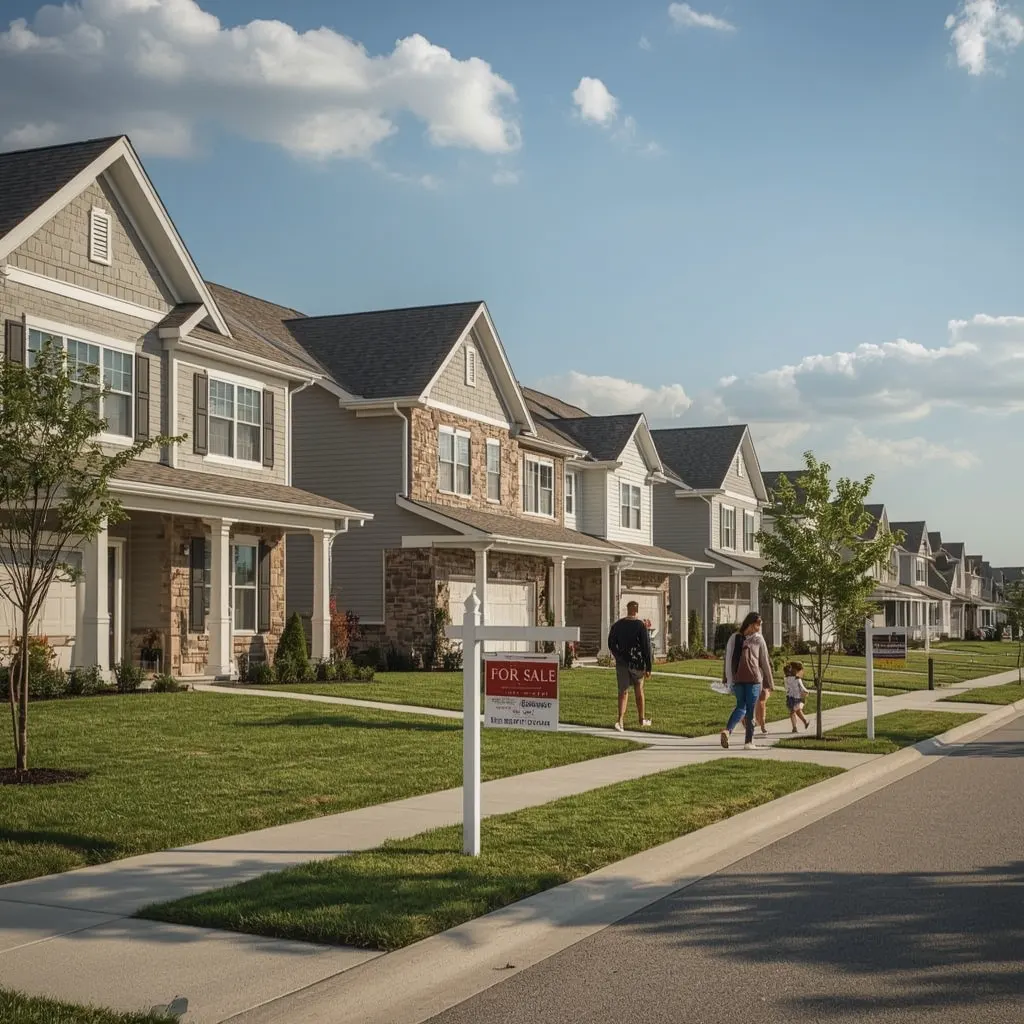

Naperville condominiums and most townhomes are bought inside associations, from complexes such as Olive Trees Condominium and Benton Terrace Condos to townhome and HOA communities across the city. Each association adds dues, rules and a document package that a house outside an association does not have.
The directory below lists 21 Naperville communities with each one’s HUD FHA list status, and the rest of this guide covers the association’s law, its documents and your loan.
I am Dan Firks, Founder and CEO of the Dan Firks Team at Coldwell Banker Real Estate Group here in Naperville. My Illinois real estate broker license is 475.141739. This guide reflects the Illinois statutes and the FHA, VA and Fannie Mae loan guidelines as they read on September 29, 2026. It is not legal or lending advice; your attorney and your lender make the calls on your purchase.
To talk through a specific unit, call or text me at 630.637.9009 or email Dan@Naperville.com.
Where can you research condos and townhomes in Naperville?
Use the Naperville home search to see which units are on the market today, choosing Attached Single under Local Property Types to narrow it to attached homes, and check each community’s HUD FHA list status in the directory below.
The second column shows what HUD’s FHA condominium list returned for a name search on September 29, 2026. HUD lists projects under the names in its records, so confirm the match and the current status with your lender.
| Community | HUD FHA condominium list, name search on September 29, 2026 |
|---|---|
| Olive Trees Condominium | Olive Trees Condominium (DuPage County): expired January 29, 2016 |
| Mill Crossing | Mill Crossing Condominiums (DuPage County): expired December 31, 2010 |
| Harbor Cove | No record found |
| Benton Terrace Condos | No record found |
| Cress Creek | Cress Creek Condominium (DuPage County): expired July 15, 2012 |
| Bridgewater | Bridgewater of Naperville (DuPage County): approved through October 22, 2027 |
| Central Park Place | No record found |
| Crosswinds | Crosswinds at Mission Oaks (DuPage County): expired July 27, 2019 |
| Eagle Pointe | No confirmed match; ask your lender |
| Enclave at Country Lakes | The Enclave at Country Lakes (DuPage County): expired August 17, 2023 |
| Townhomes of Winchester | No confirmed match; ask your lender |
| Windridge | Windridge of Naperville (Will County): approved through November 7, 2026 |
| Mill Orchard | No record found |
| Creekside | No record found |
| River Bend | No record found |
| Mayfair | Mayfair of Naperville (DuPage County): expired December 7, 2011 |
| Sawgrass Winds | No record found |
| Devonshire of Naperville | No record found |
| Stonebridge | No record found |
| Terraces of Brookdale | Terraces of Brookdale (DuPage County): expired August 14, 2015 |
| Ashwood Pointe | No record found |
No record found means a Naperville name search returned nothing: the project may be filed under another name, may never have applied or may not be a condominium.
No confirmed match means HUD has a similarly named record that may or may not be this community. Only the recorded declaration decides a community’s legal form.
For dues, rely on the association’s current budget or a written statement from the association, not an estimate.
What the rest of this guide covers
- Condominium or CICAA community
- The association documents to get
- What to review during attorney review
- Special assessments and reserves
- Rental rules and how they change
- FHA, VA and conventional project review
- Dues and your loan
- Printable checklist
- Frequently asked questions
Is a Naperville townhome a condominium or a CICAA community?
A Naperville townhome can fall under either law: the declaration recorded for the community decides whether it is a condominium under the Condominium Property Act or a common interest community under the Common Interest Community Association Act (CICAA), and the building style does not.
Illinois defines a common interest community as real estate other than a condominium or cooperative whose owners pay for common areas under a declaration administered by an association, and says it may include an attached or detached townhome, villa or single-family home (765 ILCS 160/1-5).
The answer sets your document package, its deadline and fee, and the assessment vote rules.
How to check which law applies
- Find the county. Naperville includes parts of DuPage and Will counties, so confirm which county the unit is in before you search the records.
- DuPage County: the Recorder’s online records search covers 1961 to present by name, 1985 to present by parcel number (PIN) and 1995 to present by address. Research line: (630) 407-5401.
- Will County: start at the Will County Recorder of Deeds website for its current search options.
- Read which act the declaration invokes. That, not the marketing name, controls; your attorney can confirm it.
- Check the CICAA exemption. An association organized as an Illinois not-for-profit corporation with 10 units or fewer, or with annual budgeted assessments of $100,000 or less, is exempt from CICAA unless a majority of its directors or members vote to be covered (765 ILCS 160/1-75).
In my experience, the name on the entrance sign is the weakest clue to how a community is governed; the recorded declaration settles it.
What association documents should you get before buying a Naperville condo or townhome?
Get the association’s resale package: the declaration and rules, the unit’s account, planned capital expenditures, the reserves, the last financial statement, pending suits and the association’s insurance.
In a condominium the seller must obtain these items from the board under Section 22.1 and make them available to you on request; in a community covered by CICAA, the board makes similar items available to you under Section 1-35(d).
The condominium package under Section 22.1
- The declaration, bylaws, other condominium instruments and rules.
- A statement of liens and the unit’s account of unpaid assessments.
- Capital expenditures anticipated in the current or next 2 fiscal years.
- The status and amount of the reserve fund, and any part earmarked for a project.
- The statement of financial condition for the last fiscal year available.
- Any pending suits or judgments involving the association.
- The insurance the association provides for all unit owners.
- A statement that the prior owner’s alterations are in good faith believed to comply with the condominium instruments.
- The name and mailing address of the principal officer or designated agent.
From January 1, 2027, the Public Act 104-734 text of 765 ILCS 605/22.1 adds a tenth item, the collection policy adopted under Section 18.4(t). Public Act 104-797 writes a different Section 18.4(t) and the posted statute has not reconciled them, so ask the association for its adopted policy after that date.
The principal officer must furnish the items within 10 business days of a written request.
The fee charged to the seller must be reasonable and sits under a cap that started at $375 on January 1, 2023 and is adjusted each year by the CPI-U, so $375 is the base, not today’s cap; ask the association for its current fee. Rush service within 72 hours can add $100.
The CICAA package for townhome and HOA communities
If the association is covered by CICAA, 765 ILCS 160/1-35(d) calls for the first six items above plus a statement of the insurance the association provides for common properties; ask your insurer what you still need on the unit. The Public Act 104-734 text adds the collection policy from January 1, 2027.
The board has 30 days after a written request, and the fee charged to the seller must be reasonable, with no dollar cap or rush option.
Condominium Property Act and CICAA side by side
| Question | Condominium (765 ILCS 605) | Common interest community (765 ILCS 160) |
|---|---|---|
| Resale disclosure | Section 22.1; seller obtains it from the board | Section 1-35(d), if the association is covered; board makes it available |
| Items now / from January 1, 2027 (Public Act 104-734 text) | 9 / 10 | 7 / 8 |
| Deadline after a written request | 10 business days | 30 days |
| Fee charged to the seller | Reasonable, under a cap that started at $375 in 2023 and is adjusted yearly by CPI-U; $100 more for 72-hour rush service | Reasonable direct cost, no dollar cap or rush fee |
| 115 percent petition window | 21 days (Section 18(a)(8)) | 14 days (Section 1-45(c)) |
| Unbudgeted additions or alterations | Two-thirds of the total votes | Simple majority of the total members |
| Reserves | Required; if the instruments do not require them, a 2/3 vote of the total votes can waive them, with bold disclosure in the 22.1 response (Section 9(c)) | Status and amount disclosed in the package; ask your attorney about budget rules |
What should you review in the association package during attorney review?
Read the package with your attorney during attorney review and give it to your lender before the loan commitment, starting with the items that change your cost: the unit’s account, planned capital projects, reserves, the financial statement, pending suits and insurance.
| Package item | What to look for |
|---|---|
| Declaration, bylaws and rules | Use, pet, parking and leasing rules; what the association maintains versus what you maintain |
| Liens and unit account | Unpaid assessments or charges on the unit |
| Capital expenditures | Projects planned for this year and the next two, and how they will be paid for |
| Reserve fund | The balance, money set aside for named projects, and any reserve waiver, which a condominium must disclose in its financial statements and in bold in the 22.1 response |
| Financial statement | Whether income covered expenses last fiscal year |
| Suits or judgments | Any case in which the association is a party; share it with your lender |
| Insurance | What coverage the association provides; ask your insurer what you still need on the unit |
| Collection policy (from 2027) | Late fees, payment plans and when accounts go to an attorney |
In my experience, the capital expenditure and reserve statements are worth reading side by side, because together they show whether planned work already has money behind it.
The seller’s own property disclosure is a separate document; see our guide to Illinois seller disclosure requirements. For the unit itself, read our Naperville home inspection guide.
How do special assessments get approved in an Illinois condo or townhome association?
The board adopts the budget and most separate assessments; owners can petition for a vote when the year’s total would top 115 percent of the prior year’s, owners must approve unbudgeted additions or alterations, and emergency or legally required assessments need no owner vote.
In a condominium, Section 18(a)(8) of the Condominium Property Act sets these rules:
- The 115 percent petition. When a budget or separate assessment would push the year’s total assessments above 115 percent of the prior year’s, owners with 20 percent of the votes can petition within 21 days of the board action.
- The owners’ meeting. The board must call a meeting within 30 days after the petition is delivered, and the budget or assessment is ratified unless a majority of the total votes rejects it.
- Emergencies and legal mandates. The board can adopt separate assessments for emergencies or for expenses mandated by law without owner approval or a petition. An emergency means an immediate danger to the structural integrity of the common elements or to the life, health, safety or property of the unit owners.
- Unbudgeted additions and alterations. Additions and alterations to the common elements that are not in the adopted budget need two-thirds of the total votes of all unit owners.
- Multi-year assessments. A multi-year assessment is treated as authorized in full in the first fiscal year it is approved.
Under Section 18.4(a), the same petition, meeting and majority-rejection steps apply when the board approves replacing common elements with an improvement over their original quality that costs more than 5 percent of the annual budget, unless it is mandated by law or an emergency.
In a community covered by CICAA, 765 ILCS 160/1-45 sets a parallel 115 percent rule with a 14-day petition window instead of 21, the same 30-day meeting and majority-rejection steps, and the same exemption for emergency and legally mandated assessments.
Unbudgeted additions or alterations in a CICAA community need a simple majority of the total members at a meeting called for that purpose.
Reserves are the association’s savings for repairing and replacing common elements. In a condominium, Section 9(c) requires budgets adopted on or after July 1, 1990 to include reasonable reserves.
If the instruments do not require reserves, a 2/3 vote of the total votes can waive them. The waiver must be disclosed in the financial statements and, in bold, in the Section 22.1 response, so check both.
Does the complex limit rentals, and how could the rules change?
Any leasing limit is written in the association’s declaration, bylaws or rules, and they can change after you buy: in a condominium, by an owner vote amending the declaration or bylaws or by board rules adopted after an owners’ meeting called to discuss them, and in a CICAA community, by the process its own declaration sets.
For the declaration and bylaws, Section 27(a) requires 2/3 of those voting, or the majority the instruments specify, never more than three-quarters of all unit owners.
If the instruments require it, lenders must also approve the amendment or receive notice of it. A lender that sends no negative response within 60 days of a mailed request is deemed to approve.
Board rules follow Section 18.4(h): the board adopts them after an owners’ meeting called to discuss them, with the full text in the notice, and they cannot conflict with the Act or the condominium instruments.
In a CICAA community, the Act sets no statewide vote share for amendments; the declaration and bylaws set the process, and an amendment takes effect when it is recorded unless it states a different date (765 ILCS 160/1-20).
Age-restricted 55+ communities follow separate state and federal rules; ask your attorney how they apply to the community you are considering.
Can you use an FHA or VA loan on a specific Naperville condo complex?
You can if the loan program accepts the project: look the complex up on HUD’s public FHA condominium list, ask your lender about FHA Single-Unit Approval if it is not listed, and have your lender confirm VA status.
These are condominium project tools. A townhome that is not a condominium will not appear on them, and a missing entry says nothing about its financing, so ask your lender how the home will be reviewed.
- FHA project list. Search HUD’s FHA condominium approval lookup by project name or location. It is an approval list, not a listing site. On September 29, 2026, its approved Naperville projects were Bridgewater of Naperville, Carrolwood Park Condominium, Stonewater Condominium, Vintage Club of Naperville and Windridge of Naperville, with Windridge approved through November 7, 2026 and Carrolwood Park through December 1, 2026.
- FHA Single-Unit Approval. For an unlisted project, ask your lender about Single-Unit Approval. HUD requires a project that is not FHA-approved, is complete, has at least five dwelling units and is not a manufactured home, and that meets FHA standards on insurance concentration, owner occupancy and financial condition.
- VA loans. The VA Loan Guaranty Service keeps a VA condo report page for condominium projects. Ask your lender to check the complex’s current VA status.
- Conventional loans. For a loan sold to Fannie Mae, Selling Guide B4-2.1-01 has the lender confirm that the project meets Fannie Mae’s eligibility requirements, with the full review waived for some units, such as one in a PUD project. Confirm with your lender what review your loan needs.
The HUD statuses in this guide come from name searches on September 29, 2026. Approvals expire and change, so confirm the status for the exact unit with your lender before your loan commitment.
In my experience, the project question is worth asking before the offer, because the answer shapes which loan types can work for that unit.
How do HOA or condo dues affect how much mortgage you qualify for?
Dues count much like a higher mortgage payment: Fannie Mae’s Selling Guide includes owners’ association dues in your monthly housing expense, which feeds your debt-to-income ratio.
Selling Guide B3-6-03 counts association dues, including utility charges for the common areas, and excludes utilities that apply to the individual unit. That expense is weighed against your stable monthly income.
Under B3-6-02, the maximum total ratio for manually underwritten loans is 36 percent, up to 45 percent with qualifying credit scores and reserves, and 50 percent through Desktop Underwriter. Those are program maximums, not approvals; your lender applies the limits to your file.
Enter the association’s actual monthly dues in our Naperville mortgage calculator; its HOA field starts with a sample value, not a Naperville average. Our Naperville property tax calculator estimates the other local cost for DuPage and Will County homes.
What should you check before and after your offer on a Naperville condo or townhome?
Check the legal form, loan fit and real dues before you offer; get the association package right after acceptance and review it during attorney review.
Before the offer
- Choose your representation; see our guide to choosing a buyer’s agent in Naperville.
- Check the community’s HUD FHA list result in the directory above and its current units in the Naperville home search.
- Confirm from the recorded declaration whether it is a condominium or a CICAA community.
- Ask your lender whether your loan type works for the complex.
- Get current dues and any announced special assessment in writing, then run the calculators.
After the offer is accepted
- Ask the seller, through your attorney, to request the association package in writing right away: 10 business days for a condominium, 30 days for a CICAA community.
- Review each item with your attorney using the table above.
- Schedule the inspection of the unit itself.
Before the loan commitment and closing
- Send the package, including the insurance statement, to your lender.
- Ask your attorney to confirm the unit’s account is current before closing.
Frequently asked questions about Naperville condos and townhomes
Who asks for the condo association documents, the buyer or the seller?
In a condominium sale, the seller obtains the Section 22.1 documents from the board and makes them available to the buyer on demand, so your attorney asks the seller to request them. In a community covered by CICAA, the board makes them available to the prospective buyer on demand.
Can condo owners stop a large special assessment in Illinois?
Sometimes. Owners with 20 percent of the votes can petition within 21 days against a budget or assessment above 115 percent of the prior year, and a majority of the total votes can reject it at the meeting. Emergency and legally required assessments are exempt, and unbudgeted additions or alterations need two thirds of the total votes.
Does the special assessment vote work the same way in a townhome HOA?
Not exactly. In a community covered by CICAA, the petition window is 14 days instead of 21, and unbudgeted additions or alterations need a simple majority of the total members at a meeting called for that purpose. Emergency and legally required assessments are exempt there too.
Does a conventional loan need a review of the condo project?
For a loan sold to Fannie Mae, yes. The lender must determine that the project meets Fannie Mae eligibility requirements before delivering the loan, although the full review is waived for some units, such as a unit in a PUD project. Ask your lender how it will review the complex.
Is a complex that is not on the FHA list ruled out for an FHA loan?
Not always. A unit in a condominium project that is not FHA approved may qualify through FHA Single-Unit Approval if the project meets FHA standards. The list covers condominium projects only, so a townhome that is not a condominium will not appear on it; ask your lender.
Do I have to give the association a copy of my lease if I rent out my unit?
In a condominium, yes: deliver a copy of the signed lease, or a memorandum of an oral lease, to the board by the date of occupancy or 10 days after signing, whichever comes first. CICAA sets the same rule unless the community instruments provide otherwise.
Want help with a specific Naperville condo or townhome?
Call or text me at 630.637.9009 or email Dan@Naperville.com with the complex and unit you are considering, and we can go over the timeline, which association documents to request and the questions to bring to your attorney and lender.
You can also use our contact form or read more about Dan Firks, Founder and CEO of the Dan Firks Team at Coldwell Banker Real Estate Group in Naperville.
Looking to Buy or Sell in Naperville?

Have questions about buying or selling real estate in Naperville? Get in touch with Dan Firks today.
Contact Dan Firks
Recent Post
Oct. 03, 2026
Naperville Condominiums and Townhomes: Dues, Documents and Loans
Oct. 02, 2026
Naperville Permit Search: Check a Home’s Permit History Before Selling
Oct. 01, 2026
Choosing a Buyer’s Agent in Naperville: What You Sign Before Touring
Sep. 30, 2026
Home Inspection in Naperville, IL: What Home Inspectors Check
Sep. 29, 2026
New Apartments in Naperville, IL: Status, Units and Locations
Explore Naperville
Naperville is a vibrant community offering something for everyone. From highly rated schools and welcoming neighborhoods to local dining, seasonal events, and everyday conveniences, the city blends suburban comfort with an active lifestyle. Whether you’re researching the area, planning a visit, or considering a move, explore the sections below to learn more about what makes Naperville a great place to live, work, and enjoy.
Explore Naperville