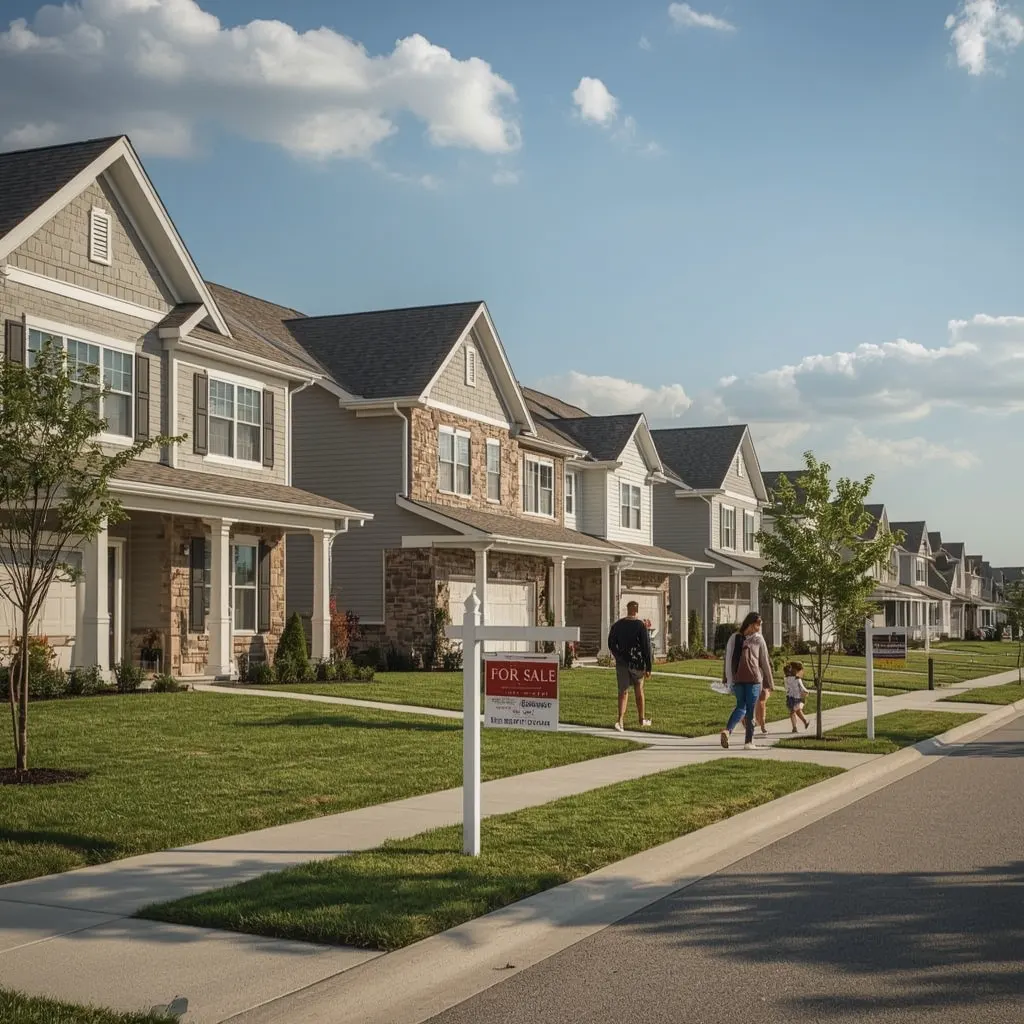

To buy a house in Naperville, you talk to a lender, sign a written buyer agreement, search, and make an offer. After the seller accepts, attorney review, inspections and your loan run on the contract’s deadlines, you buy the City of Naperville’s transfer stamp if the home is inside city limits, and you close at a title company’s escrow office. The deed is then recorded in DuPage or Will County.
I am Dan Firks, Founder and CEO of the Dan Firks Team at Coldwell Banker Real Estate Group here in Naperville. My Illinois real estate broker license is 475.141739. Most of the decisions come before you have a contract. To talk through your own timeline, call or text me at 630.637.9009 or email Dan@Naperville.com.
Sources were checked on October 13, 2026. Paragraph numbers refer to the Multi-Board Residential Real Estate Contract 8.0. Its day counts are defaults, and your signed contract controls. This is general information, not legal or lending advice.
In this guide
- The steps, with deadlines
- The lender conversation
- The buyer agreement
- Searching and checking an address
- What goes into an offer
- Attorney review
- From acceptance to closing
- The City of Naperville steps
- Closing and the deed
- How long it takes
- Checklist
- FAQ
What are the steps to buy a house in Naperville?
There are ten steps: talk to a lender, sign a buyer agreement, search, make an offer, get through attorney review, inspect, line up insurance and the loan, buy the City stamp if the home is inside city limits, do the final checks, and close. The first four come before you have a contract. The table gives each step’s deadline and source.
| Step | You sign or receive | Deadline | Who handles it |
|---|---|---|---|
| 1. Lender | Prequalification or preapproval letter; Loan Estimate after you apply | Loan Estimate within three business days of the application (CFPB) | You and your lender |
| 2. Buyer agreement | Written agreement with your agent’s brokerage | In writing (225 ILCS 454/15-50); before touring (MRED Section 1(c)) | You and your agent |
| 3. Search | Listings; City and county records | Before you offer | You and your agent |
| 4. Offer | Signed Multi-Board 8.0 offer | Earnest money by the date you fill in (3(b)) | You, your agent, the seller’s side |
| 5. Attorney review | Approval or proposed changes, by Notice | 5 Business Days after acceptance (13) | Both attorneys |
| 6. Inspections | Reports; any Notice of requests | 5 Business Days after acceptance, if 15(b) is initialed | You, your inspector, your attorney |
| 7. Insurance and loan | Proof of insurability; written loan approval | Insurability: 10 Business Days (9). Under option 8(a), loan approval by the earlier of 45 days after acceptance or 5 Business Days before closing | You, your insurer, your lender |
| 8. City stamp | If the home is inside city limits: Statement of Open Accounts, then the transfer stamp | Open accounts request at least 7 business days before closing; stamp review typically three business days (City) | Buyer side, by ordinance; ask your attorney who submits |
| 9. Final checks | Closing Disclosure; final walkthrough | Disclosure at least three business days before closing (CFPB); walkthrough before possession (23) | Your lender; you and your agent |
| 10. Close and record | Closing documents; possession at closing unless paragraph 35 applies | Closing date you fill in (5); deed recorded afterward | Title company escrow office; county recorder |
The contract’s Business Days are Monday through Friday, excluding federal holidays (paragraph 25). The federal Closing Disclosure clock counts every day except Sundays and federal legal holidays (12 CFR 1026.2(a)(6)), so do not count one with the other’s calendar.
Multi-Board 8.0 is the current form, which the Illinois Real Estate Lawyers Association lists for its members behind a login, so your agent or attorney can provide the full form.
Should you get pre-approved or pre-qualified before you look at homes?
Talk to a lender before you tour, and ask what the lender checked rather than which label the letter carries. The Consumer Financial Protection Bureau (CFPB) says, “Lenders use the terms ‘prequalification’ and ‘preapproval’ differently.”
Some lenders base a prequalification letter on information you report without verifying it, and issue a preapproval only after they verify it. Either way, the CFPB says the letter “is not a guaranteed loan offer.”
When you formally apply, the lender must give you a Loan Estimate within three business days of receiving your application (12 CFR 1026.19(e)). It is not an approval: “When you receive a Loan Estimate, the lender has not yet approved or denied your loan application,” the CFPB says. Keep it to compare with the Closing Disclosure later.
To estimate a monthly payment at different prices, use the Naperville mortgage calculator; what you qualify for and the actual rate come from your lender.
In my experience, the lender conversation belongs before the first showing, next to the written buyer agreement.
Do you need a written agreement with a buyer’s agent?
Yes. Illinois law requires a brokerage that represents you in buying to set out the terms in a written brokerage agreement (225 ILCS 454/15-50), and the MRED rules call for it before you tour.
An exclusive agreement must also promise minimum services, including presenting offers and helping with offers and notices until contingencies are satisfied or waived (225 ILCS 454/15-75).
Under the MRED multiple listing service rules (Section 1(c), revised May 14, 2026), the agreement states that compensation is not set by law and is negotiable. For what the agreement should say, see how to choose a buyer’s agent in Naperville.
How do you search for a house in Naperville?
Search within the price range from your lender conversation, then check three things about any address before you offer: city limits, county, and its permit and code record. You can search Naperville listings on our property search.
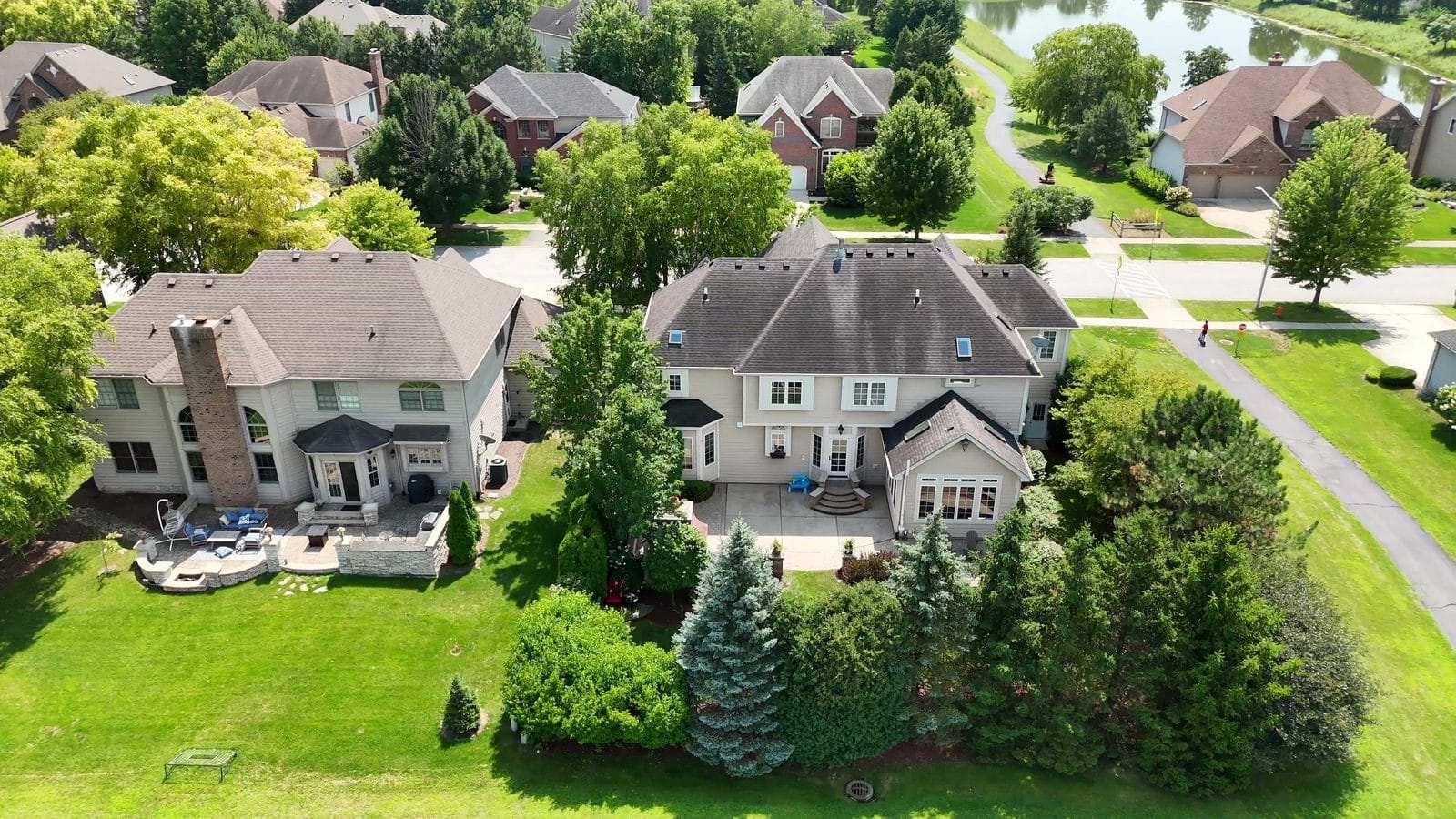
- City limits. The City transfer stamp applies only inside city limits. Check a property’s incorporated status in the City’s Your Place app.
- County. Naperville lies in both DuPage and Will counties. The City’s townships page places Naperville Township and Lisle Township in DuPage County, and Wheatland Township and DuPage Township in Will County; it also lists Winfield and Milton townships, which cover small portions of the city. The county an address lies in is where its deed is recorded.
- Permits and code issues. The City advises checking for building and code inspection issues before purchase. For outstanding building permits, building fees, or code enforcement actions and fines, it points you to a Freedom of Information Act request.
If you are choosing a newly built home from a builder, the agreement, inspections and City sign-off follow a different path; see phase inspections and the City’s occupancy sign-off on new construction. Naperville.com also has separate guides to first-time buyer programs, condos and townhomes, unincorporated areas, foreclosures, and checking which school district serves an address.
What goes into an offer on a Naperville house?
An offer sets the price, the earnest money and who holds it, how you are paying, which contingencies apply, and the closing date. On the Multi-Board 8.0 form, each is a blank you fill in or an option you initial.
| Term | Paragraph | What you fill in or choose |
|---|---|---|
| Earnest money | 3(b) | Amount and due date are blank. The Escrowee the contract names holds it in trust for both parties. |
| Your brokerage’s pay | 4 | Initial one: the seller pays your brokerage a stated amount, or does not. Negotiated. |
| Closing | 5 | The date is a blank; closing is at the title insurance company’s escrow office nearest the property. |
| Possession | 6 | At closing unless paragraph 35 applies. |
| Financing | 8 | Initial one: financing contingency, cash, or cash with financing allowed. |
| Insurance | 9 and 10 | Insurability; a flood-hazard option. |
| Attorney review | 13 | 5 Business Days after acceptance. |
| Inspections | 14 and 15 | AS IS (14) or one of three options (15); with none initialed, the 15(a) waiver applies. |
| Selling your home | 31 | Only if initialed. |
There is no default earnest money amount; it is negotiated. Paragraph 27 governs how earnest money is released if a contract ends, and what that means in a given case is a question for your attorney.
How do offers compete? There is no formula; the seller weighs the whole set of terms and can accept, counter or decline.
Inside city limits, set the paragraph 5 closing date so it can fit the Statement of Open Accounts request the City says must be received at least 7 business days before closing, and the stamp review the City describes as typically three business days.
How does attorney review work in Illinois?
Under paragraph 13 of the Multi-Board 8.0 form, each side’s attorney has 5 Business Days after the Date of Acceptance to approve the contract, disapprove it, or propose changes, by written Notice.
- Disapproval cannot rest on the purchase price alone.
- Under paragraph 13(c), proposed changes are deemed a counteroffer; paragraph 13(d) lets an attorney make proposals that are not. What either means for your contract is a question for your attorney.
- If proposed changes are not resolved in writing by 10 Business Days after acceptance, the form lets either party end the contract by Notice; ask your attorney how that applies to you.
The 5 Business Days start at acceptance, so ask a licensed Illinois real estate attorney about paragraph 13 and its timing before you make an offer. Your agent can send the accepted contract to your attorney and can keep the dates in front of you; the legal judgments, including what any Notice means, stay with your attorney.
What happens between an accepted offer and closing?
Several contract clocks run at once: inspections, insurance, financing and any home sale contingency, then title, survey and the final walkthrough.

Home inspection. With option 15(b), you have 5 Business Days after acceptance to inspect and to serve any Notice of requests, so book the inspector right away. For what to inspect and how to check an inspector’s license, see the Naperville home inspection guide; a separate guide covers radon testing.
Insurance, financing and appraisal. Paragraph 9 asks for proof of insurability within 10 Business Days. Under option 8(a), if you have not applied for the loan and paid for the appraisal within 10 Business Days after acceptance, the seller may end the contract by Notice; ask your attorney how that applies. Option 8(a) also sets written loan approval by the earlier of 45 days after acceptance or 5 Business Days before closing. Questions about the loan itself go to your lender.
Selling your current home. Paragraph 31 applies only if initialed, and the seller keeps a kick-out right. See how a home sale contingency and kick-out clause work in Illinois. What it means in your contract is a question for your attorney.
Title, survey and walkthrough. The seller provides a title commitment (paragraph 20) and, except for condominiums, a survey at least 1 Business Day before closing (paragraph 21). Paragraph 23 lets you inspect the home before possession to confirm its condition still matches acceptance; that is your final walkthrough.
The same stretch, from the seller’s side, is in what happens after an offer is accepted in Naperville.
What does the City of Naperville require from a buyer before closing?
Inside city limits, the buyer buys the City’s real estate transfer stamp, at $1.50 per $500 of the purchase price, by City ordinance, after a Statement of Open Accounts is requested. Paragraphs 18 and 19(a) of the 8.0 form leave municipal transfer tax to the party the ordinance names.
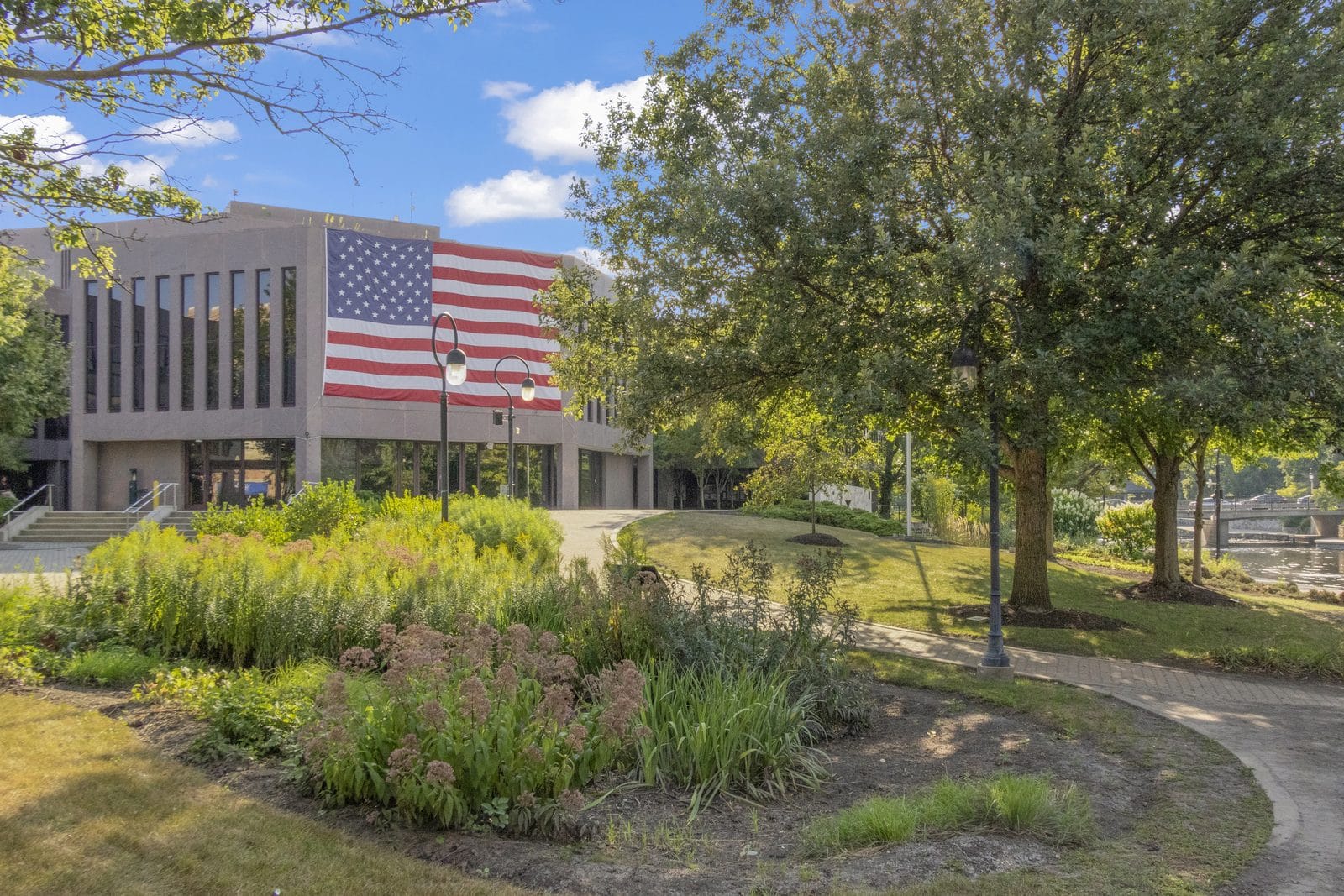
- Request the Statement of Open Accounts through the City’s Help Center. The City says it “must be received at least 7 business days prior to closing.”
- Apply for the stamp online. Applications “are typically reviewed within three business days,” can take longer at busy times, and the City suggests “submitting seven days prior to when you need the stamp.”
Ask your attorney who on your closing team submits these. The Help Center and the online application are both reached from the City’s Real Estate Transfer Tax page. For the state and county stamps and the exempt stamp, see our cost to sell a home in Naperville guide.
In my experience, the Statement of Open Accounts is worth putting on the calendar the day the contract is accepted.
What happens at closing, and which county records the deed?
At closing you pay the balance due and the seller conveys the deed, at the escrow office of the title insurance company nearest the property (paragraph 5); the deed is then recorded with the county where the home sits: DuPage or Will.
- Closing Disclosure. “By law, you must receive your Closing Disclosure at least three business days before your closing,” the CFPB says. Compare it with your Loan Estimate and take questions to your lender.
- Prorations. Paragraph 12 prorates taxes, assessments, utilities and association fees to and including the closing date.
- The deed. The seller conveys a recordable warranty deed (paragraph 18). The DuPage County Recorder records DuPage-side homes and the Will County Recorder of Deeds in Joliet records Will-side homes. Ask your attorney who files it.
- Money and keys. Paragraph 3(c) sets the balance due at closing as the purchase price, plus or minus prorations, less the earnest money and any credits. Under paragraph 6, possession is delivered at closing unless optional paragraph 35 applies; ask your attorney what that paragraph changes.
How long does buying a home take from application to closing?
The closing date you and the seller write into paragraph 5 sets your timeline; every period in the step table has to fit inside it, including the City’s open-accounts and stamp lead times inside city limits.
There is no published Naperville figure. Nationally, the average purchase loan closed in 36.8 days in March 2026; ICE’s typical purchase loan took 11 days from application to rate lock and 26 more to close (ICE Mortgage Monitor, May 2026).
What should be on your Naperville home buying checklist?
A Naperville home buying checklist covers nine items, from the lender letter through the final walkthrough:
- Lender letter in hand; Loan Estimate saved.
- Written buyer agreement signed before touring.
- Licensed Illinois real estate attorney asked about the review timing before the offer.
- City limits, county and permit record checked for the address.
- Offer terms decided: price, earnest money, financing and inspection options, closing date.
- Date of Acceptance noted; 5 Business Day review and inspection periods counted.
- Proof of insurability within 10 Business Days; under option 8(a), loan applied for and appraisal paid within 10 Business Days.
- Statement of Open Accounts requested at least 7 business days before closing; City stamp applied for.
- Closing Disclosure read; final walkthrough done.
When you are ready to start, or want a second look at your timeline, call or text me at 630.637.9009 or email Dan@Naperville.com.
Written by Dan Firks, an Illinois real estate broker, license 475.141739, with Coldwell Banker Real Estate Group.
Frequently asked questions
What is the difference between prequalification and preapproval?
Lenders use the two terms differently. Some base a prequalification letter on information you report without checking it and issue a preapproval only after verifying it. The CFPB says neither is a guaranteed loan offer.
How long is attorney review on an Illinois home purchase?
Under the Multi-Board Residential Real Estate Contract 8.0, attorney review runs 5 Business Days after the Date of Acceptance, counting Monday through Friday except federal holidays. Your signed contract controls.
Who holds the earnest money when you buy a home in Naperville?
The Escrowee named in the contract, in trust for both parties. The Multi-Board 8.0 form offers the brokerage of the seller, the brokerage of the buyer or another agreed party, and leaves the amount and due date blank.
When should you apply for the Naperville transfer stamp?
The City says applications are typically reviewed within three business days and suggests submitting seven days before you need the stamp. Request the Statement of Open Accounts first, at least 7 business days before closing.
When do you get the Closing Disclosure?
At least three business days before closing, by federal law, according to the Consumer Financial Protection Bureau. Compare it with your Loan Estimate.
Which county records the deed for a Naperville home?
The county where the home sits. Naperville lies in both DuPage and Will counties, so the deed goes to the DuPage County Recorder or the Will County Recorder of Deeds.
How long does it take to close on a house in Naperville?
There is no published Naperville figure. Nationally, ICE reported that the average purchase loan closed in 36.8 days in March 2026, with a typical purchase loan taking 11 days from application to rate lock and 26 more to close. Your contract closing date in paragraph 5 sets your timeline.
Looking to Buy or Sell in Naperville?

Have questions about buying or selling real estate in Naperville? Get in touch with Dan Firks today.
Contact Dan Firks
Recent Post
Oct. 14, 2026
How to Buy a House in Naperville: The Steps From Planning to Closing
Oct. 13, 2026
New Construction Inspections in Naperville: Phases and Occupancy
Oct. 13, 2026
Home Sale Contingency in Illinois: How the Kick Out Clause Works
Oct. 12, 2026
Buying a Foreclosure or Short Sale in Naperville: How Each One Works
Oct. 11, 2026
Average Rent in Naperville vs Buying: First Year and Five Year Costs
Explore Naperville
Naperville is a vibrant community offering something for everyone. From highly rated schools and welcoming neighborhoods to local dining, seasonal events, and everyday conveniences, the city blends suburban comfort with an active lifestyle. Whether you’re researching the area, planning a visit, or considering a move, explore the sections below to learn more about what makes Naperville a great place to live, work, and enjoy.
Explore Naperville