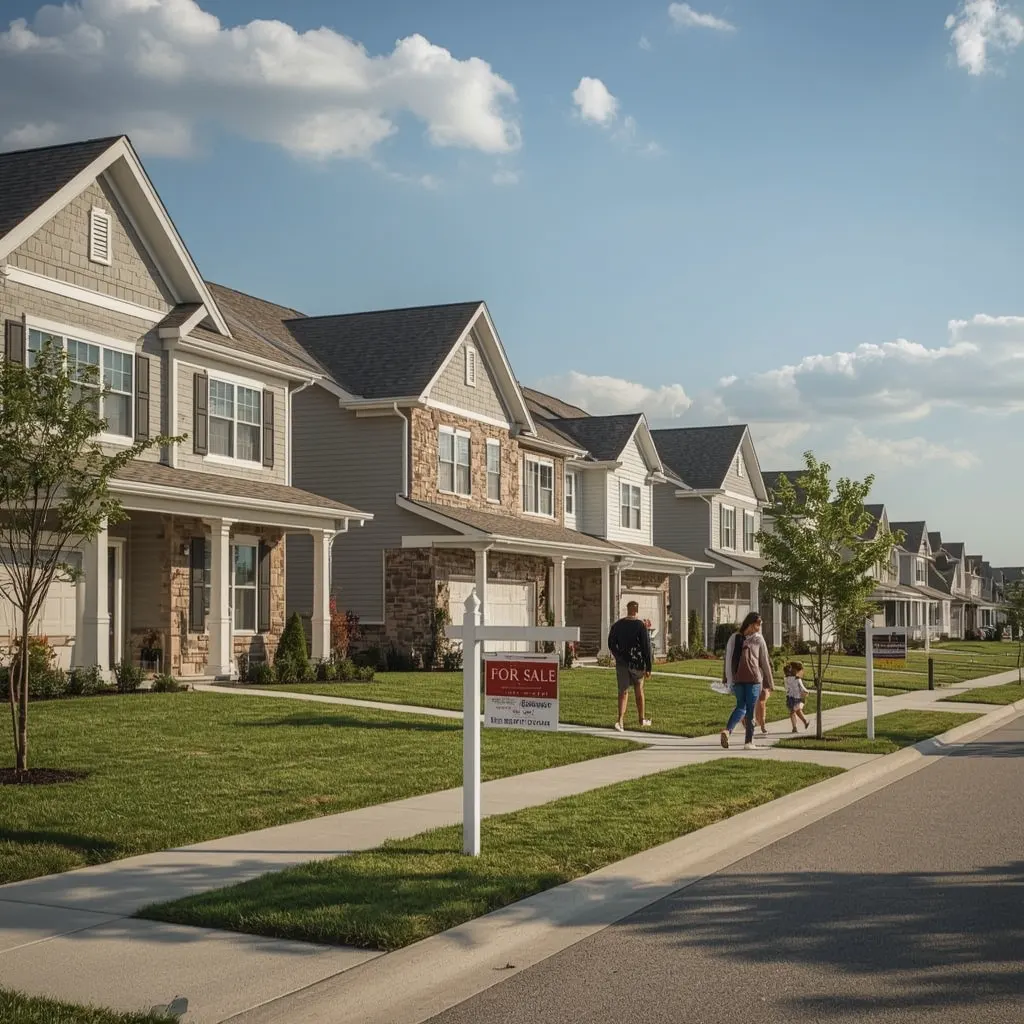

Ask a realtor six groups of questions before you list: how they built your price, what their marketing actually produces, what the fee covers and what the agreement commits you to, who you will really be talking to and how, what happens after an offer, and what the plan is if the first two weeks are quiet. Ask every agent the same set so the answers are comparable. The questions below are the ones I expect a good seller to ask me, written out so you can take them into the appointment.
I am Dan Firks, Founder and CEO of the Dan Firks Team at Coldwell Banker Real Estate Group here in Naperville. If you would rather talk through your own timing and situation first, call or text me at 630.637.9009 or email Dan@Naperville.com.
What this checklist covers
- What should you ask a realtor before listing your home
- Questions about pricing
- Questions about marketing
- Questions about fees and the listing agreement
- Questions about communication
- Questions about what happens after an offer
- What answers should worry you
- Frequently asked questions
What should you ask a realtor before listing your home?
Ask about pricing, marketing, fees and the agreement, communication, the post offer process, and the contingency plan. Six groups, roughly twenty questions, and the whole list fits on one page.
The reason to group them is that a listing appointment drifts. An agent walks your house, talks about the market, hands you a folder, and an hour later you have an impression instead of an answer. Grouped questions keep the appointment on the things you can actually compare between three agents.
| Question group | The one question that carries the most weight | What you are really testing |
|---|---|---|
| Pricing | Which recent nearby sales did you use to build this number, and what did you adjust for? | Whether the price came from evidence or from a desire to win the listing |
| Marketing | Can you pull up the last three homes you listed right now so I can see them? | Whether the marketing plan already exists or is a promise |
| Fees and agreement | What does your fee include, and what will I still be paying for separately? | Whether the number and the scope are written in the same place |
| Communication | Who will I actually be talking to, and by which channel? | Whether you are hiring the person in front of you or a handoff |
| Process | Walk me through what happens the day an offer comes in. | Whether they run a process or improvise |
| Contingency | What do we do if we get no showings in the first two weeks? | Whether there is a plan for the case nobody wants to discuss |
If you have not narrowed your list of agents yet, start with the criteria in our guide to how to choose a listing agent in Naperville. This article is the interview itself. That one is how to build the short list you are interviewing.
In my experience, the sellers who get the most out of these appointments write the questions down and ask them in the same order every time. It feels stiff for about ninety seconds. Then it turns three sales pitches into three comparable answers, which is the entire point.
What questions should you ask a realtor about pricing?
Ask how the number was built, not what the number is. The right pricing questions are which comparable sales did you use, what did you adjust for, what is the likely sale price as opposed to the list price, and what happens if the first two weeks are quiet.
Ask these:
- How did you arrive at this number? The answer should be a short walk through three to five recent closed sales, not a feeling about the market.
- Can I see the CMA in writing? A comparative market analysis is the agent estimate of what your home is worth today. Ask for it as a document with the comparable sales named, not as a number said out loud.
- Which sales did you rule out, and why? This is the question that separates the agents who did the work. Every honest CMA discards comparables, and the reasons are the interesting part.
- What did you adjust for? Lot size, square footage, finished basement, updates, condition, and the date of the sale all move the number. Ask which adjustments were applied to yours.
- What do you expect it to actually sell for? List price and likely sale price are two different numbers, and an agent who will not say the second one out loud is avoiding the harder conversation.
- What is the plan if we get no showings in the first two weeks? Ask for the trigger and the action. When do we look at the price, and what else changes first.
- How does my home compare to what is on the market right now? Closed sales tell you what buyers paid. Active listings tell you what your home is competing against this week.
A note on what a CMA is and is not, because sellers conflate these three things constantly. A CMA estimates market value. It is not your net proceeds, which is what is left after the costs of the sale. It is not a tax calculation either, which is a question for a qualified tax professional. If you want the mechanics of how the valuation number gets built before your first appointment, read how a home valuation works in Naperville, and if you want a starting number for your own address, run our Naperville home value tool.
Local pace is the context for the two week question. As reported by Redfin for the three months ending May 2026, the median Naperville home went under contract in about 43 days, the sale to list price ratio was 100.2 percent, 38.9 percent of homes sold above list, and 14.6 percent of listings had a price drop. Read together, that says most homes here land close to asking and roughly one in seven sellers still had to correct a price. An agent who has no answer for the price correction scenario has no plan for the outcome that actually happens to a share of sellers every quarter.
What questions should you ask a realtor about marketing?
Ask to see the work, not the plan. The strongest marketing question in the whole interview is can you pull up the last three homes you listed on your phone right now, because that is exactly what your listing is going to look like.
Ask these:
- Is professional photography included, and who pays for it? Ask plainly. Photography is sometimes included in the fee, sometimes billed separately, and sometimes done on a phone.
- Do you include a floor plan, and do you shoot video? Ask which homes get which treatment and why yours would or would not.
- Can I see the last three homes you listed? Look at the photo count, the lighting, whether the listing copy describes the actual house, and whether the fields are filled in.
- Where does the listing actually run? The MLS entry feeds the portals. Ask what else happens: email to their buyer database, social, paid promotion, broker preview, open house schedule.
- What happens in the first seventy two hours after it goes live? Ask for days and names, not adjectives.
- Who writes the listing description? Ask to read one they wrote for a home like yours.
- What would you change about my house before we list, and what would you leave alone? Good prep advice is specific and includes things not worth doing.
That last question is worth pushing on. The most useful answer I ever hear a seller get is a short list with something on it that the agent recommends skipping. An agent who tells you to do everything has not looked closely enough at your particular house to know what buyers in your price band will actually notice. For the full picture of what tends to pay off and what does not, our guide on how to prepare your Naperville home to sell covers the prep decisions in detail, so you can spend the appointment on the agent rather than on paint colors.
In my experience, the live listings check is the single most predictive thing a seller can do in an interview, and almost nobody does it. Testimonials are curated and portfolios are old. What an agent has on the market this week is the sample you are being sold.
What questions should you ask about fees and the listing agreement?
Ask what the fee includes and what the agreement commits you to, in writing, before you sign. Compensation is not set by law and is fully negotiable, so there is no standard number to compare against. What you can compare is scope, term, and exit.
Under the settlement terms that took effect on August 17, 2024, three things changed that directly affect this conversation. Offers of buyer broker compensation can no longer be published on the MLS. Any compensation offered to a buyer side broker requires your prior written approval as the seller. And buyers now sign written agreements with their own agents before they tour homes. So the fee conversation is really two conversations: what you agree to pay your own listing agent, and separately, whether and what you choose to offer a buyer side broker.
| Ask this | What a complete answer looks like | Where it should appear |
|---|---|---|
| What is your fee, and what does it include? | An itemized scope: pricing, photography, floor plan, video, listing distribution, showings, negotiation, contract to close | Written into the listing agreement, not said out loud |
| What will I still pay for separately? | Photography or staging if excluded, plus the closing costs that are yours regardless of who represents you | An estimated seller cost sheet you can keep |
| How is buyer agent compensation handled now? | An explanation that it is negotiated separately, cannot be advertised on the MLS, and needs your written approval | A separate written authorization, not an assumption |
| How long is the agreement? | A specific term with a specific end date | The agreement itself |
| How do we part ways if it is not working? | A described cancellation path, plus what happens to the marketing materials and any costs already incurred | The agreement itself |
| What is the protection period after it ends? | A named number of days and a description of which buyers it applies to | The agreement itself |
Two follow up questions I would ask if I were the seller. First, if we reduce the scope, does the fee change, and how. That question tells you whether the number is attached to work or is just a number. Second, what happens to the fee if I find the buyer myself. Ask it before you sign rather than after a neighbor knocks on your door.
Separately from the fee, ask what the sale itself will cost you. In Illinois the seller customarily pays the state transfer stamp of $0.50 per $500 of value and the county stamp of $0.25 per $500. The City of Naperville municipal stamp of $1.50 per $500 is buyer paid by city ordinance, so it is not your line item. An agent who tells you the city stamp is a seller cost is working from a generic template. Our page on what it costs to sell a home in Naperville itemizes the rest, and our Naperville net proceeds calculator estimates what is actually left at the end, which is the number most sellers are really asking about when they ask about commission.
What questions should you ask about communication?
Ask about style and cadence, not availability. Every agent says they are always available. The useful questions are who will I actually be talking to, on which channel, how fast during a live negotiation, and what happens when you are unavailable.
This is the complaint I hear most often from sellers who were unhappy with a previous agent, and it is almost never about competence. It is about not knowing what was happening for four days. Ask these:
- Will I be working with you or with a team member? Both are fine. Not knowing is not fine. Ask who does showings, who does paperwork, and who calls you with an offer.
- Do you prefer text, call, or email? Say which one you prefer too. A mismatch here causes more friction than almost anything else in a transaction.
- How fast do you return messages on a normal day? Ask for a number of hours, not a word like promptly.
- How fast during a live negotiation? Different question, different answer. Offers have expirations.
- What is your standing update, and when? A weekly summary on a set day beats an open promise to keep me posted.
- How do I get showing feedback, and how quickly? Ask whether you get the raw comments or a summary.
- What happens when you are on vacation or in a closing? Ask for the name of the person who covers.
- How do you deliver bad news? Ask it straight. The answer tells you a great deal.
You get the sample during the interview itself. Note how long the agent took to reply when you first reached out, whether they confirmed the appointment, and whether anything they promised to send arrived. Whatever that pattern is, it is the best version of it you are going to see. It does not improve after you sign.
What questions should you ask about what happens after an offer?
Ask the agent to walk you through the days after an offer arrives: how offers are presented and compared, how attorney review works, who orders and attends the inspection, who tracks the deadlines, and what happens if something comes back badly.
Ask these:
- How do you present an offer to me? You want terms explained, not just price: financing type, contingencies, closing date, credits requested, and what is actually strong or weak about each one.
- What do you do if we get more than one? Ask about the process for handling multiple offers and how they document what was communicated to each side.
- How does attorney review work here? Illinois transactions run through an attorney review period in practice. The standard contract used in this area builds it in, commonly five business days from full execution. Your agent does not replace a licensed Illinois real estate attorney, and a good one expects you to have your own.
- Who coordinates the inspection? Ask who schedules it, whether the agent attends, and how the results come back to you.
- How do you handle a repair request? Ask them to describe the last inspection negotiation they ran and what they recommended.
- What are my disclosure obligations? Most Illinois sellers of residential property complete a written disclosure report and deliver it before the buyer signs a contract, plus a separate radon disclosure, plus the federal lead paint disclosure for homes built before 1978. Ask when in the process each one gets handled.
- What happens if the appraisal comes in low? Ask for the options, not a reassurance.
- Who tracks the dates? Contracts run on deadlines. Ask by name who watches them and what happens when one slips.
If you want the whole sequence laid out before you start interviewing, our Naperville home selling hub walks through the steps from preparation to closing, so the appointment can stay focused on the agent instead of on the basics.
In my experience, the offer walkthrough question is where confident agents get more specific and less confident agents get more general. There is no way to answer it well from a script, because the honest answer includes the parts that go wrong.
What answers should worry you?
The two answers I would treat most seriously are an agent who agrees with any price you name, and an agent who cuts their fee the instant you ask without changing anything about the scope. Both are answers about judgment, not about your house.
The fee one surprises sellers, so it is worth explaining. Compensation is genuinely negotiable and asking about it is completely fair. But watch what happens when you ask. If the number drops immediately with no discussion of what changes, you have just watched that agent negotiate under mild pressure from someone on their own side. That is the same skill you are hiring them to use on your behalf against a buyer who wants a credit. A better answer sounds like here is what I can adjust and here is what comes out of the scope if I do.
| The answer you hear | Why it should worry you | What to ask next |
|---|---|---|
| Whatever number you want to list at, we can try it | Buying the listing with a high price and reducing later is a real practice | Show me the closed sales that support that number |
| The fee drops the second you ask, with no change in scope | Shows you how they hold a position under light pressure | What comes out of the scope at that number? |
| Maximum exposure and a comprehensive marketing strategy | No days, no channels, no names, so there is nothing to check | What happens on day one, day three, and day seven? |
| Everybody charges about the same | Compensation is not set by law and is fully negotiable | What does your number include that another number would not? |
| I can guarantee it sells in a set time or at a set price | No agent controls the market, the appraisal, or the buyer pool | What happens if it does not? |
| I am always available | Availability without a cadence is not a commitment | Who answers when you are in a closing? |
| We should sign today so we can get moving | A same day signature protects the agent, not you | Can I take the agreement home and read it? |
| A long answer about how great the area is | A market speech is easy, a walkthrough of your specific house is the work | What about my house specifically will hold it back? |
One more, quieter warning sign. If an agent cannot tell you what the plan is when the house does not sell, there is no plan. Ask about week three before you sign, because week three is when you find out whether you hired a marketing plan or a sign in the yard.
Frequently asked questions about interviewing a realtor
How many realtors should I interview before choosing one?
Three to five is the range I would give any seller. Fewer than three and you have impressions rather than a comparison, because you have nothing to measure the first answer against. More than five and the appointments start blurring together without adding new information. Ask all of them the same questions in the same order so the answers line up side by side.
What is the most important question to ask a listing agent?
Which recent nearby sales did you use to build my price, and what did you adjust for. Price is the decision that drives everything else in the sale, and this question cannot be answered well without doing real work first. Agents who prepared will name specific closed sales and explain the adjustments. Agents who guessed will talk about the market in general terms.
Should I ask a realtor for references?
Yes, and ask for two kinds. Ask for recent sellers whose homes were similar to yours in price band and location, and ask for a seller whose sale did not go smoothly. The second one is more useful than the first, because it tells you how the agent behaves when something goes wrong. You can also skip references entirely and look at the agent live listings instead, which is harder to curate.
What should a listing agent include in the fee?
There is no fixed answer, which is exactly why you have to ask. Compensation is not set by law and is fully negotiable, so what one agent includes another may bill separately. Ask for the scope in writing: pricing and the written analysis behind it, photography, floor plan, video, listing distribution, showing coordination, negotiation, and management of the file through closing. Then ask what falls outside that list.
How fast should a realtor respond to messages?
Ask for a number rather than accepting a word like promptly, and ask for two numbers. Normal days and live negotiations are different situations, and offers carry expirations. The specific answer matters less than whether the agent will commit to one and whether their behavior during your interview already matches it.
Is it rude to interview more than one realtor?
No. It is normal and expected, and any experienced listing agent has been one of several many times. You are choosing who will handle one of the largest transactions of your life. If an agent reacts badly to learning you are talking to others, that reaction is useful information about how they will handle a negotiation on your behalf.
What should I not tell a realtor while I am still interviewing?
Keep your lowest acceptable price, your deadline pressure, and your loan balance to yourself until you have chosen someone and signed. Those belong in a strategy conversation after you hire, not in a pitch. Facts about the house are the opposite. Condition problems, past water, an old roof, or work done without a permit should be shared early, because Illinois sellers carry their own disclosure obligations no matter who represents them.
Ready to start interviewing listing agents in Naperville?
Take this list into every appointment, including mine. If you want a starting number for your own address before those conversations begin, run our Naperville home value tool. If you would rather just talk it through, call or text me at 630.637.9009 or email Dan@Naperville.com and we will walk your timing, your questions, and what your house realistically looks like to buyers right now.
Written by Dan Firks
I’m Dan Firks, Listing Specialist, Luxury Home Specialist, Realtor, Broker, and Founder and CEO of the Dan Firks Team at Coldwell Banker Real Estate Group in Naperville. Over the course of my career I’ve sold more than 1,500 homes and led one of the top-producing real estate teams in Illinois, grounded in my core values of infinite worth, integrity, and excellence. My work and market insights have been featured in Chicago Magazine, Zillow, Realtor.com, Top Agent Magazine, Naperville Magazine, and Glancer Magazine. To talk about your move in the Naperville area, call or text me at 630.637.9009 or email Dan@Naperville.com.
Market figures in this article are as reported by Redfin for Naperville, three months ending May 2026. Transfer stamp rates are as published by the State of Illinois, DuPage and Will County, and the City of Naperville as of August 2026. Nothing here is legal or tax advice. For legal questions about your sale, consult a licensed Illinois real estate attorney. For tax questions, consult a qualified tax professional.
Looking to Buy or Sell in Naperville?

Have questions about buying or selling real estate in Naperville? Get in touch with Dan Firks today.
Contact Dan Firks
Recent Post
Oct. 14, 2026
How to Buy a House in Naperville: The Steps From Planning to Closing
Oct. 13, 2026
New Construction Inspections in Naperville: Phases and Occupancy
Oct. 13, 2026
Home Sale Contingency in Illinois: How the Kick Out Clause Works
Oct. 12, 2026
Buying a Foreclosure or Short Sale in Naperville: How Each One Works
Oct. 11, 2026
Average Rent in Naperville vs Buying: First Year and Five Year Costs
Explore Naperville
Naperville is a vibrant community offering something for everyone. From highly rated schools and welcoming neighborhoods to local dining, seasonal events, and everyday conveniences, the city blends suburban comfort with an active lifestyle. Whether you’re researching the area, planning a visit, or considering a move, explore the sections below to learn more about what makes Naperville a great place to live, work, and enjoy.
Explore Naperville