
Radon testing in Naperville during a home purchase is a short-term test of at least 48 hours, made with the house closed by an Illinois-licensed radon measurement professional or technician, and timed to finish inside your contract’s five Business Day inspection window. The U.S. EPA says to fix a home at 4 pCi/L or higher.
What you can then ask of the seller depends on which Paragraph 15 inspection option is initialed in the Illinois Multi-Board contract. DuPage and Will counties are both EPA Radon Zone 2, and the EPA says to test every home regardless of zone.
I am Dan Firks, Founder and CEO of the Dan Firks Team at Coldwell Banker Real Estate Group here in Naperville. My Illinois real estate broker license is 475.141739. For a question about a specific house, call or text me at 630.637.9009 or email Dan@Naperville.com.
This is general information, not legal, health or financial advice. Your signed contract controls, not the printed Multi-Board form, so confirm the version and the inspection option initialed with your attorney. Health facts come from the EPA and the Illinois Emergency Management Agency and Office of Homeland Security (IEMA-OHS).
In this guide
- Radon testing Naperville: how does it work when you buy a home?
- Is radon a problem in Naperville homes?
- What does Illinois require for a real estate radon test?
- Who is allowed to test for radon for a fee in Illinois?
- Can you use a radon test kit or detector during a home sale?
- What do radon levels in a Naperville home mean?
- How is radon mitigated, and what does it cost?
- What can you ask for if the radon result is high?
- Should you still test a newer or already mitigated home?
- What belongs on a buyer’s radon checklist?
- What should a Naperville buyer do first about radon?
- Frequently asked questions
Radon testing Naperville: how does it work when you buy a home?
When you buy a home in Naperville, radon testing is an inspection you order and pay for, and under the Multi-Board Residential Real Estate Contract 8.0 it is open to you only if Paragraph 15(b) or 15(c) is initialed, with any notice to the seller due within five Business Days after the Date of Acceptance.
Version 8.0 took effect on February 1, 2025. Its Paragraph 15 has three inspection options, and if none is initialed, option a) applies:
| Paragraph 15 option | Radon test | Asking the seller for something |
|---|---|---|
| a) Waiver of Professional Inspections (applies if nothing is initialed) | Waived | Not available |
| b) Right to Inspection with Requests | Allowed, by licensed or certified inspection services | A Notice within 5 Business Days, limited by 15(b)(1) |
| c) Right to Inspection with No Requests | Allowed | A credit or repair request lets the seller terminate; you may cancel within 5 Business Days |
An AS IS sale under Paragraph 14 also waives inspections unless b) or c) is initialed. Business Days are Monday through Friday, excluding federal holidays (Paragraph 25), and they count from the Date of Acceptance, not from the start of the test.
In my experience, radon is the inspection to book on day one: closed-building conditions start at least 12 hours before the device goes down, the test runs at least 48 hours, and a lab device still needs analysis before the report reaches you. The general inspection and the full deadline table are in our Naperville home inspection guide for buyers.
Separately, the Illinois Radon Awareness Act requires the seller to give you a radon pamphlet and disclosure form rather than to test, as our guide to Illinois seller disclosure requirements explains.
Is radon a problem in Naperville homes?
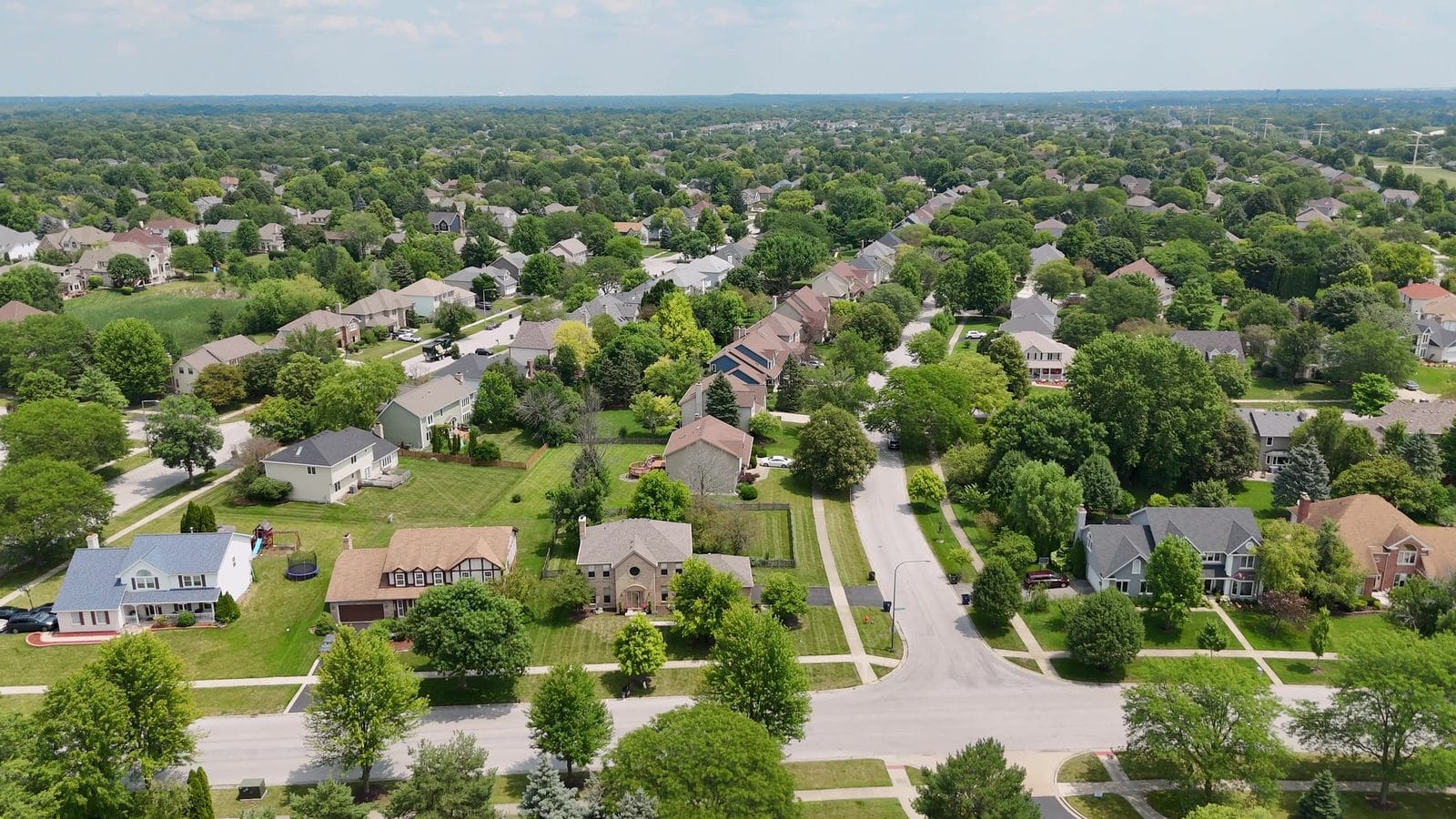
Radon can be a problem in any Naperville home, and only a test of the house tells you: the EPA places DuPage and Will counties in Radon Zone 2, a predicted average indoor screening level of 2 to 4 pCi/L, and says its zone map should not be used to decide whether an individual home needs testing.
Neither county is in Zone 1, the highest-potential zone, with a predicted average above 4 pCi/L. The EPA Map of Radon Zones for Illinois was developed in 1993 and says all homes should be tested, regardless of zone designation.
Statewide, an Illinois Department of Public Health (IDPH) FAQ page, citing an IEMA study, says 41 percent of Illinois homes tested for radon had levels higher than the 4.0 pCi/L action level. That figure is statewide and covers tested homes only; the page shows no date, but its page data dates it to 2021 (checked September 29, 2026).
IEMA’s radon in Illinois page links an interactive map of licensee-reported tests by county or zip code, with measurement data from 2003 to 2019. IEMA says the map is not intended to decide whether a home should be tested, because all homes should be. I do not treat any part of the city as higher or lower.
What does Illinois require for a real estate radon test?
Illinois sets the real estate protocol in 32 Ill. Adm. Code 422.130: a short-term measurement lasting 48 hours to 90 days depending on the device, made under closed-building conditions in each lowest structural area suitable for occupancy, using one of two testing options.
A split-level with a basement, a slab-on-grade room and a room over a crawlspace is tested in all three, in rooms that can be regularly occupied. Over 2,000 square feet of tested area, each additional 2,000 square feet needs another test location, and readings from closets, sumps, crawlspaces or foundation nooks cannot be the basis for a decision to mitigate.
| Rule | Option 1: simultaneous testing | Option 2: continuous monitor |
|---|---|---|
| Equipment | At least 2 similar devices, co-located 4 to 5 inches apart | An active continuous monitor that records a new result at least hourly |
| Minimum length | 48 hours to 90 days, depending on the device | 48 hours, with at least 44 contiguous hours of usable data |
| Result used to decide on mitigation | The average of the pair, with both results reported | The average of the periodic results |
| Built-in check | If one result is 4.0 pCi/L or higher, the other is below it, and the higher is more than twice the lower, the pair is repeated at no added cost to you | The first 4 hours may be discarded or incorporated using system correction factors |
Closed-building conditions start at least 12 hours before any test shorter than 96 hours, and the licensee documents that written instructions went to the person who controls the building. During the test:
- Windows stay closed, and exterior doors stay closed except for normal entry and exit; a licensed home inspector may briefly open and reclose windows after telling the measurement licensee.
- Installed heating and cooling keeps running, whole-house fans stay off, and an unoccupied home is kept in the normal range, such as 72 degrees F plus or minus 5.
- Fireplaces and combustion appliances, other than water heaters and cooking appliances, stay off unless they are the primary heat.
- An existing radon mitigation system keeps running.
- A test shorter than 96 hours is not run during severe storms or sustained winds of 30 miles per hour or more.
The person in control of the property, such as the buyer, seller, occupant or real estate professional, signs a non-interference agreement, and detected interference invalidates the result.
Device placement, such as 20 inches to 6 feet off the floor and no charcoal canisters in kitchens, bathrooms, laundry rooms or spa rooms, is the licensee’s job.
IEMA’s pamphlet, Radon Testing Guidelines for Real Estate Transactions (last revised October 2007), gives a plain-language overview of placement; the testing-option numbers above follow the current rule, as amended effective December 9, 2013.
Who is allowed to test for radon for a fee in Illinois?
Only an IEMA-OHS licensee may test for radon for pay in Illinois: since January 1, 1998, the Radon Industry Licensing Act (420 ILCS 44/25) has barred unlicensed paid radon measurement, laboratory analysis and reduction work, and the sale of detection devices, except by retail stores that only sell or distribute devices and have no other role with the client.
| Task | Who may do it |
|---|---|
| Paid radon measurement in a home | An IEMA-OHS radon measurement licensee (Measurement Professional or Measurement Technician) |
| Laboratory analysis of a radon device | An IEMA-OHS licensed laboratory |
| Selling a radon detection device | An IEMA-OHS licensee, except a retail store that only sells or distributes devices |
| Installing an active mitigation system or radon vent fan, or upgrading a new-construction passive pipe to active | A licensed radon contractor (420 ILCS 52/25) |
Check any license on IEMA’s Radon Active Licensee Listing, which filters by license type and service county, or call the IEMA radon information line at (800) 325-1245. A home inspector license is not a radon license, so if your inspector offers the radon test, ask for the IEMA radon measurement license.
The Radon Measurement Professional must return results within 45 days after retrieving the devices (32 Ill. Adm. Code 422.130(o)(1); see also 420 ILCS 44/30). That is an outer limit, so agree before you book that the report reaches you and your attorney inside your five Business Days.
Can you use a radon test kit or detector during a home sale?
A store-bought kit or your own detector is not a test to rely on during a sale: Paragraph 15(b) of the Multi-Board 8.0 contract refers to licensed or certified inspection services, and IEMA says it is not in the best interest of the buyer or seller to rely on a radon measurement by anyone other than a licensed measurement professional or technician.
| Question | One store-bought kit | Licensed real estate test |
|---|---|---|
| Follows Option 1 or Option 2 under 32 Ill. Adm. Code 422.130 | No, one kit is neither a side-by-side pair nor a continuous monitor | Yes, the licensee follows one of them |
| Who places the device and controls test conditions | You do, with no measurement licensee on site | An IEMA-OHS measurement licensee, who documents closed-building conditions and any interference |
| Who analyzes it and reports | An IEMA-OHS licensed laboratory, within 45 days (422.130(o)(2)) | The Radon Measurement Professional, within 45 days after retrieving the devices (422.130(o)(1)) |
An electronic detector you own is in the same position: its reading is not a licensee measurement under 32 Ill. Adm. Code 422.130, so treat it, like a seller’s earlier kit result, as background and still order a licensed test. I do not recommend specific kits or detectors.
After closing, IDPH says the EPA recommends testing your home every two years, and that low-cost do-it-yourself kits are sold at hardware stores and may be available from local health departments. The laboratory that analyzes a kit must hold an IEMA-OHS license, though a store that only sells kits is exempt.
What do radon levels in a Naperville home mean?
Radon levels in a Naperville home are reported in picocuries per liter (pCi/L), and the EPA says to fix the home if the level is 4 pCi/L or higher, while levels below 4 pCi/L still pose a risk and, in many cases, may be reduced.
The EPA estimates radon causes about 21,000 lung cancer deaths per year, from its 2003 Assessment of Risks from Radon in Homes, as cited in its March 2024 Home Buyer’s and Seller’s Guide to Radon (EPA 402/K-24/001).
| Licensed result | What the EPA or IEMA says | What to check in your contract |
|---|---|---|
| 4 pCi/L or higher | Fix the home; IEMA recommends fixing if any one of the lowest structural areas is elevated | Under 15(b), whether to request mitigation or a credit; under 15(b) or 15(c), whether to cancel within 5 Business Days |
| 2 to 4 pCi/L | Consider fixing; levels below 4 still pose a risk and in many cases may be reduced | The form sets no radon number, so weigh the same choices with your attorney |
| Option 1 pair split around 4.0, the higher more than twice the lower | Not an EPA question | The licensee repeats the pair at no added cost, which uses days inside your deadline |
Compare each location’s result with 4 pCi/L, because results from separate locations are not averaged. Keep the full report for your attorney; it shows the exact start and stop dates and times, the device used and the exact device locations.
How is radon mitigated, and what does it cost?
Radon is most commonly reduced with a vent pipe and fan that draw air from beneath the building and send it outside, installed in Illinois only by a licensed radon contractor, and an IDPH FAQ page dated 2021 by its page data puts the usual cost at $800 to $1,200, depending on the method and building size.
Illinois law (420 ILCS 52/15) names four fan-driven active soil depressurization types, and the EPA’s Consumer’s Guide to Radon Reduction (EPA 402/K-10/005, 2025) describes where each draws radon from:
| System type | Where the suction is applied |
|---|---|
| Sub-slab depressurization (SSD) | Pipes through the floor slab into the crushed rock or soil underneath |
| Drain tile depressurization (DTD) | The drain tiles or perforated pipe that carry water away from the foundation |
| Block wall depressurization (BWD) | Hollow block foundation walls, often combined with sub-slab suction |
| Sub-membrane depressurization (SMD) | Beneath a high-density plastic sheet laid over a crawlspace earth floor |
Treat the IDPH radon FAQ range as dated: the page shows no date, and its page data dates it to 2021 (checked September 29, 2026).
The EPA gives no dollar figure; its March 2024 guide says a system in an existing home costs about the same as other common home repairs and recommends estimates from one or more qualified mitigators. Get a written estimate from an IEMA-licensed radon contractor before you put a credit amount in a request.
No agency source I checked gives an installation time, so get a written schedule that fits your closing date. The post-mitigation test runs at least 24 hours after the system is fully operational and within 30 days of activation, with the system running, and IEMA’s pamphlet says to make it an independent short-term test.
What can you ask for if the radon result is high?
If Paragraph 15(b), Right to Inspection with Requests, is initialed in your contract, you can ask the seller, by Notice within five Business Days after the Date of Acceptance, to mitigate before closing or to give a credit, and the seller decides how to respond.
Paragraph 15(b)(1) limits requests to listed major components, such as the heating and cooling systems and the structural and mechanical components. Radon is not named there, though the same subparagraph says the seller pays for any retest if radon mitigation is performed.
A request outside the terms of 15(b)(1) lets the seller terminate and direct the return of your earnest money, so your attorney frames any radon request.
| Option | What it means | Points to settle in writing |
|---|---|---|
| Seller mitigates before closing | The seller hires a licensed radon contractor | The license, system type, retest date and closing paperwork; the seller pays for any retest under 15(b)(1) |
| Credit at closing | The seller contributes money and you mitigate after closing | The amount, based on a written estimate, and how your lender treats a credit |
| Price change | The purchase price goes down | The new payment, which you can run through the Naperville mortgage calculator |
| Cancel | Under 15(b)(3) or 15(c), Notice within 5 Business Days after the Date of Acceptance that the condition is unacceptable makes the contract null and void | Your attorney serves the Notice |
| No request | You handle radon after you own the home | Mitigation and retesting are then yours to pay for |
If no written agreement is reached within 10 Business Days after the Date of Acceptance, either party may terminate under 15(b)(2), and missing your notice deadline waives your right to terminate under Paragraph 15. Do not send any part of the report with your Notice unless the seller or the seller’s attorney asks for it in writing; your attorney keeps the full report ready.
Your attorney sets the wording. Our guide on whether you need a real estate attorney in Illinois is written for sellers but explains what an attorney handles during the contract period.
Selling instead? Whether to test before you list is covered in how to prepare your Naperville home to sell, and responding to a buyer’s radon request is part of what happens after you accept an offer. The Naperville net proceeds calculator shows how a radon credit changes what you keep.
Should you still test a newer or already mitigated home?
Yes, because a passive pipe or a running fan shows how the house was built or fixed, not what the air measures during your contract.
Under the Radon Resistant Construction Act, all new residential construction in Illinois must include passive radon resistant construction (420 ILCS 52/20), and only a licensed radon contractor may add a radon vent fan or upgrade that passive pipe to an active system (420 ILCS 52/25).
If the house already has an active system, ask the seller for the installer’s license, the install date and any test run afterward. Your tester’s report must say whether a mitigation system was observed, whether an active one is operating and, if installed after November 1, 2009, its mitigation tag number.
In my experience, a visible vent pipe makes people assume the radon question is settled, but the pipe tells you what was installed and the test tells you whether it works.
What belongs on a buyer’s radon checklist?
A buyer’s radon checklist has seven steps: confirm the Paragraph 11 radon documents and the Paragraph 15 option, book a licensed tester, meet the five Business Day deadline, set closed-building conditions, compare results with 4 pCi/L, and handle any request or retest. Print or save this one:
- Confirm with your attorney that you received the IEMA pamphlet and the Disclosure of Information on Radon Hazards, and that Paragraph 11 marks “has received” for both.
- Confirm that Paragraph 15(b) or 15(c) is initialed; if nothing is initialed, 15(a) waives inspections.
- Book an IEMA-OHS radon measurement licensee when the contract is accepted, check the license, and ask whether the test uses two devices or a continuous monitor and how many locations the square footage requires.
- Get the report turnaround in writing so it lands inside the five Business Days after the Date of Acceptance.
- Confirm the seller has the closed-building instructions at least 12 hours before a test shorter than 96 hours, the non-interference agreement is signed, and the utilities are on, as the seller agrees under Paragraph 15(b).
- Compare each location’s result with 4 pCi/L and give the full report to your attorney.
- If the result is high, decide with your attorney inside the deadline whether to request mitigation or a credit under 15(b) or to cancel. If the seller mitigates, confirm a licensed radon contractor, a seller-paid retest once the system has run at least 24 hours, and the system paperwork at closing.
What should a Naperville buyer do first about radon?
Book an IEMA-OHS licensed radon test as soon as your contract is accepted, so the result and report land inside your five Business Days.
I can help you fit that test into the inspection window, read the report against the EPA action level, and prepare a request with your attorney if the number is high. I do not recommend individual testing or mitigation companies; check anyone you hire on IEMA’s Radon Active Licensee Listing.
Call or text me at 630.637.9009 or email Dan@Naperville.com. You can also send a real estate inquiry online, or send a general note through the Naperville.com contact page.
Frequently asked questions
Is radon testing required when you buy a home in Illinois?
No. The Illinois Radon Awareness Act says it does not imply any obligation on the seller to test, and on the Multi-Board 8.0 contract a radon test is a buyer option, paid for by the buyer, when Paragraph 15(b) or 15(c) is initialed.
How much does a radon test cost in Illinois?
None of the EPA, IEMA or IDPH sources checked for this guide publishes a price for a real estate radon test, so ask IEMA licensed measurement professionals for written prices. Under Multi-Board 8.0, the buyer pays for the inspections the buyer orders.
What radon level is too high in a Naperville home?
The EPA says to fix a home at 4 pCi/L or higher and to consider fixing between 2 and 4 pCi/L, because levels below 4 pCi/L still pose a risk and in many cases may be reduced.
Can I use a store bought radon test kit during a home sale?
Not as the test to rely on. One kit meets neither Illinois real estate testing option, since Option 1 needs two devices side by side and Option 2 a continuous monitor, and IEMA says it is not in the best interest of the buyer or seller to rely on anyone other than a licensed measurement professional or technician.
Do air purifiers clear out radon?
Standard air cleaners do not. The EPA says air cleaners without special media such as activated carbon or alumina will not remove radon gas, and that it cannot currently evaluate whether any air cleaner reduces the health risk from radon decay products, so the EPA answer to a high level is fixing the home.
Who pays for the retest after radon mitigation?
Under Paragraph 15(b)(1) of the Multi-Board 8.0 contract, if radon mitigation is performed, the seller pays for any retest. Illinois rules run that test at least 24 hours after the system is fully operational and within 30 days, with the system operating throughout.
What houses are more likely to have radon?
The EPA says any home can have a radon problem, including new and old homes, well sealed and drafty homes, and homes with or without basements, and that its county zone map should not be used to decide whether an individual home needs testing. Only a test tells you the level in a given home.
Looking to Buy or Sell in Naperville?

Have questions about buying or selling real estate in Naperville? Get in touch with Dan Firks today.
Contact Dan Firks
Recent Post
Oct. 24, 2026
How Many Homes Are in the Ashbury Subdivision in Naperville?
Oct. 23, 2026
Ashbury Naperville Neighborhood Guide: Pool, Parks, Schools and Homes
Oct. 23, 2026
Watch: What Is Ashbury in Naperville? 3 Things Home Buyers Should Know

Oct. 16, 2026
Naperville Restaurants: Choose Where to Eat by Outing

Oct. 16, 2026
Centennial Beach in Naperville: Plan a Seasonal Visit
Explore Naperville
Naperville is a vibrant community offering something for everyone. From highly rated schools and welcoming neighborhoods to local dining, seasonal events, and everyday conveniences, the city blends suburban comfort with an active lifestyle. Whether you’re researching the area, planning a visit, or considering a move, explore the sections below to learn more about what makes Naperville a great place to live, work, and enjoy.
Explore Naperville